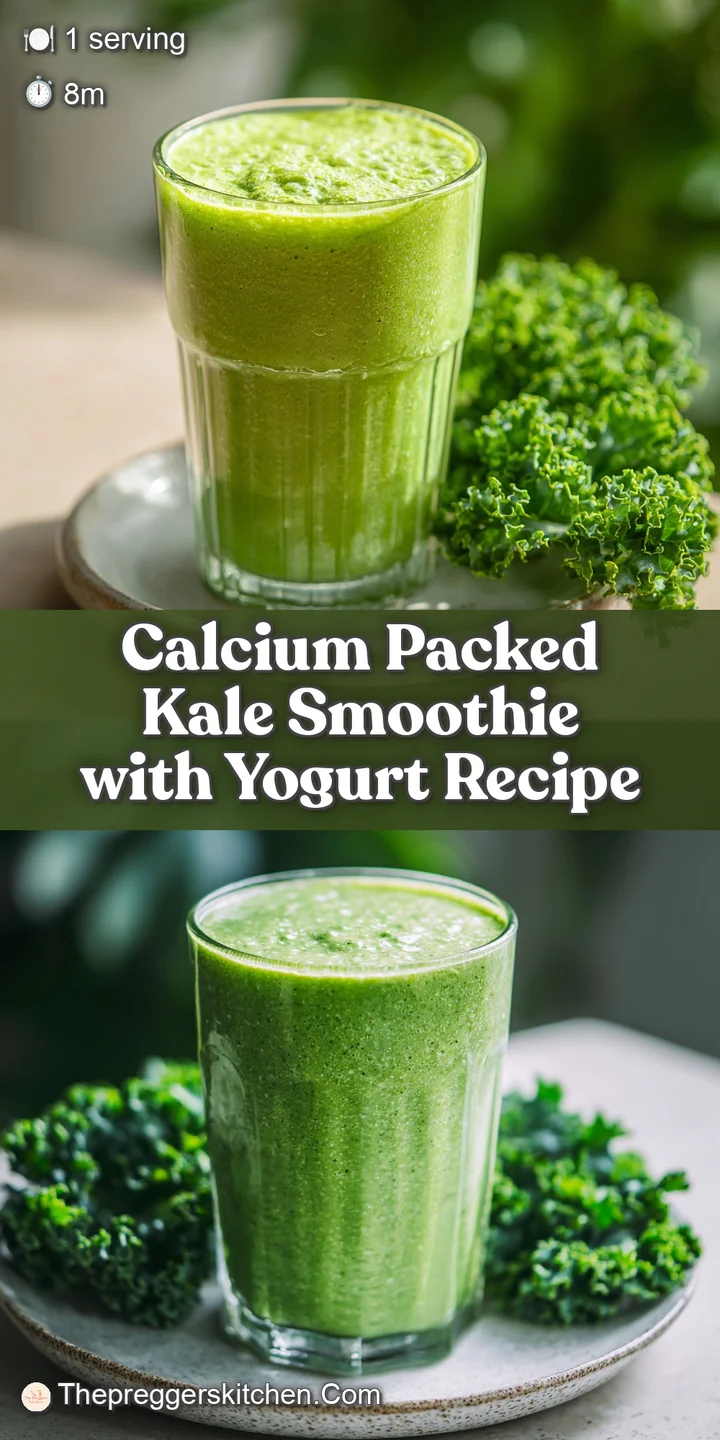
Calcium Packed Kale Smoothie: Bone Boosting Blend
- Time: Active 8 minutes, Passive 0 minutes, Total 8 minutes
- Flavor/Texture Hook: Velvety and bright with a subtle nutty finish
- Perfect for: Post workout recovery or a nutrient dense breakfast for bone health
- Boost Your Bone Health with a Calcium Packed Kale Smoothie
- The Logic Behind Achieving Maximum Bioavailable Nutrient Absorption
- Measuring Success with These Exact Numeric Recipe Specifications
- Analyzing the Core Components and Scientific Roles of Ingredients
- Choosing Smart Substitutes to Fit Your Specific Dietary Lifestyle
- Utilizing the Most Effective Kitchen Tools for Silky Results
- Mastering the Perfect Pour with These Precise Stepwise Instructions
- Resolving Every Common Texture and Flavor Obstacle You Face
- Adjusting Your Recipe Portions for Large Groups or Prep
- Modifying Key Ingredients to Meet Diverse Nutritional Requirements
- Maintaining Peak Freshness and Maximizing the Smoothie Storage Life
- Enhancing the Visual Presentation for a More Appetizing Drink
- Recipe FAQs
- 📝 Recipe Card
Boost Your Bone Health with a Calcium Packed Kale Smoothie
There is a specific sound a blender makes when it hits the perfect vortex a deep, consistent hum that tells you the kale has finally surrendered its fibrous structure. I remember my first attempt at this drink years ago; I ended up with something that looked like swamp water and felt like chewing on lawn clippings.
It was a texture failure that almost turned me off green drinks forever, but the science of "liquid salads" is actually quite simple once you understand the order of operations.
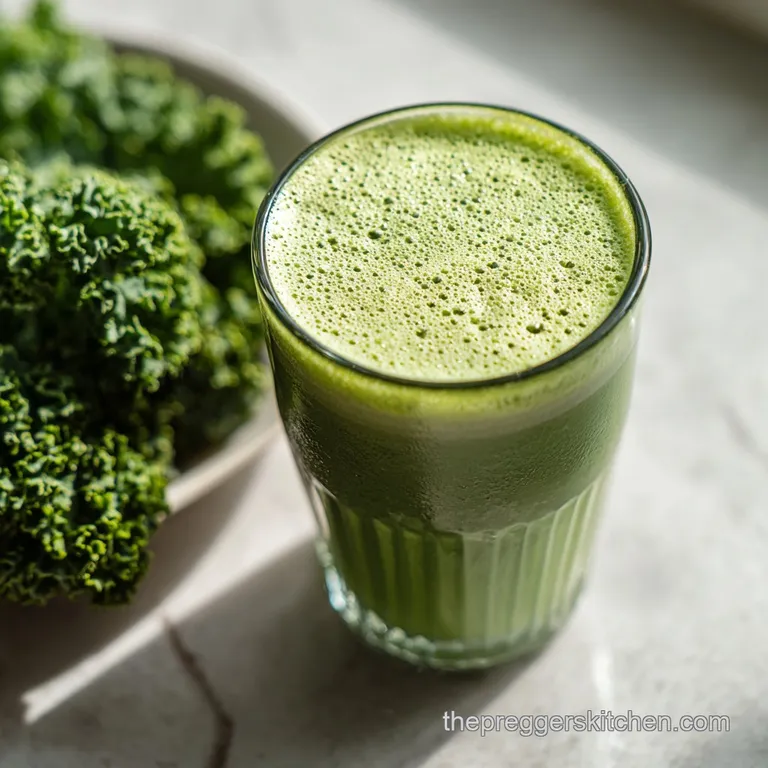
We are aiming for a result that is velvety, not gritty. When we combine the structural integrity of fresh curly kale with the creamy suspension of Greek yogurt and almond butter, we create an emulsion that masks the bitterness while highlighting the brightness of the citrus.
This isn't just a drink; it is a calculated delivery system for minerals.
The secret lies in how we treat the greens before they even touch the milk. By removing the woody stems and focusing on the tender leaves, we remove the source of that "earthy" pungency that ruins most recipes.
You’ll find that the frozen banana doesn't just provide sweetness it acts as the primary cooling agent, creating a thick, shake like consistency without the need for ice cubes that would eventually dilute the nutrient density.
The Logic Behind Achieving Maximum Bioavailable Nutrient Absorption
Mechanical Shearing: High speed blending at maximum velocity ruptures the rigid cellulose cell walls of the kale, making the intracellular calcium immediately accessible for digestion.
Vitamin C Synergy: The citric acid and vitamin C from the small orange act as a biological key, significantly increasing the absorption of the non heme iron and calcium found in the greens.
| Feature | Fresh Kale Leaves | Pre Frozen "Smoothie" Kale |
|---|---|---|
| Texture Impact | Crisp and bright; requires longer blending | Softer cell walls; blends faster into a liquid |
| Flavor Profile | Mildly bitter but very fresh | Can develop a "freezer" taste if not sealed |
| Nutrient Density | Peak vitamins and minerals | Slightly reduced folate due to blanching/freezing |
Measuring Success with These Exact Numeric Recipe Specifications
To ensure your calcium packed kale smoothie achieves the right balance of flavor and function, keep these three precision checkpoints in mind during the process.
- Blender Velocity: Start your blender on the lowest setting for 10 seconds to break down the large frozen banana chunks, then ramp up to the highest speed for a full 45 seconds to liquefy the kale.
- Leaf Weight: Aim for exactly 60g of kale (about 2 packed cups); using too much will overwhelm the almond butter’s ability to mask the bitterness.
- Liquid Ratio: Stick to the 1 cup of fortified soy milk to maintain a viscosity that is thick enough to support the chia seeds but thin enough to sip through a straw.
Analyzing the Core Components and Scientific Roles of Ingredients
Understanding why each element is included helps you avoid the common mistake of omitting a "small" ingredient that actually serves a massive biological purpose.
| Ingredient | Science Role | Pro Secret |
|---|---|---|
| Fresh Curly Kale | Primary calcium source | Remove stems to eliminate the bitter, woody aftertaste |
| Fortified Soy Milk | Vitamin D and Calcium base | Shake the carton vigorously to redistribute settled minerals |
| Chia Seeds | Omega-3 and fiber binder | Add these last to prevent them from gelling at the bottom |
| Almond Butter | Healthy fat for absorption | Use room temperature butter so it emulsifies instantly |
Choosing Smart Substitutes to Fit Your Specific Dietary Lifestyle
While the original recipe is optimized for bone density, you might need to pivot based on what is in your pantry. Each of these swaps will slightly alter the nutrient profile, so choose based on your primary goal.
- 2 cups Fresh Curly Kale: Baby spinach Why this? Offers a milder flavor but provides slightly less calcium per gram than kale.
- 1 cup Calcium Fortified Soy Milk: Fortified Pea Milk Why this? Maintains the high protein content and calcium levels while being nut free.
- 1/2 cup low-fat Greek Yogurt: Silken Tofu Why this? Provides a similar creamy texture and protein boost for a dairy-free version.
- 1 tbsp Almond Butter: Sunflower Seed Butter Why this? Keeps the fat content high for vitamin absorption while being school safe/allergen friendly.
- 1 small Orange: 1/2 cup Fresh Pineapple Why this? The bromelain and vitamin C still aid absorption while adding tropical sweetness.
| Original Ingredient | Substitute | Why It Works |
|---|---|---|
| Greek Yogurt (1/2 cup) | Coconut Yogurt (full fat) | Similar creaminess. Note: significantly lower in protein and calcium than Greek varieties. |
If you are looking for a different profile entirely, the creamy base of this drink is quite similar to the texture in my Strawberry Banana Protein recipe, which focuses more on muscle recovery.
Utilizing the Most Effective Kitchen Tools for Silky Results
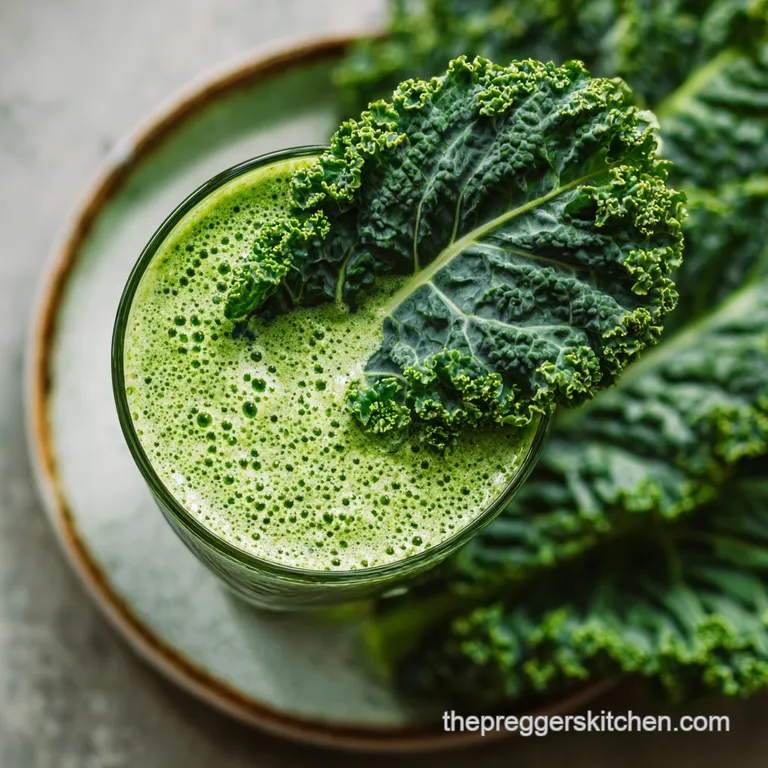
A standard blender can work, but a high speed blender (like a Vitamix or Blendtec) is the gold standard here. The high RPMs are what actually turn a "salad in a cup" into a velvety emulsion.
If you are using a lower powered machine, you must blend the kale and soy milk together before adding any other ingredients to ensure the leaves are fully pulverized.
You will also want a silicone spatula to scrape down the sides. Kale bits have a tendency to stick to the jar above the blade line, and if they aren't incorporated, you'll end up with a leafy "shrapnel" in your final sip. Finally, use a heavy bottomed glass.
This smoothie is dense, and a lightweight plastic cup can feel top heavy once filled.
Mastering the Perfect Pour with These Precise Stepwise Instructions
- Strip the kale. Pull the leaves away from the thick center ribs and discard the stems. Note: Stems contain bitter compounds that the blender cannot fully mask.
- Measure the greens. Pack the 2 cups of kale into your measuring cup or weigh out 60g for precision.
- Layer the liquids. Pour the 1 cup of calcium fortified soy milk into the blender jar first. Note: Liquid at the bottom creates a vortex that pulls solids toward the blades.
- Add the cream. Spoon in the 1/2 cup of low-fat Greek yogurt directly onto the milk.
- Drop the fruit. Place the medium frozen banana and the peeled, de seeded small orange into the jar.
- Incorporate the fats. Add 1 tbsp of almond butter, ensuring it sits on the fruit and not the sides of the jar.
- Top with seeds. Sprinkle the 1 tbsp of chia seeds over the top of the pile.
- Start the motor. Pulse three times to break the frozen banana into smaller shards.
- Liquefy the mixture. Increase speed to high and blend for 45-60 seconds until the color is a uniform, vibrant green.
- Check the consistency. Stop the blender and stir with a straw to ensure no kale fragments remain.
Chef's Note: If the smoothie feels too thick to blend, add the soy milk in 2 tablespoon increments. Never add water, as it dilutes the calcium concentration and the velvety mouthfeel we've built.
Resolving Every Common Texture and Flavor Obstacle You Face
Gritty or Sandy Texture Solutions
This usually happens when the kale hasn't been blended long enough or the blender lacks the power to break down the chia seeds. If you find the texture unpleasant, try soaking the kale in the soy milk for 5 minutes before blending.
This softens the cell walls, making them easier for the blades to catch.
Fixing a Bitter and Pungent Flavor
Kale can vary in bitterness depending on the season (winter kale is usually sweeter). If your drink tastes too "green," the acidity from the orange might not be enough. A tiny pinch of sea salt can actually suppress bitter receptors on your tongue, making the banana and almond butter flavors pop.
| Problem | Root Cause | Solution |
|---|---|---|
| Separation | Over blending or heat | Add one ice cube and pulse briefly to re emulsify the fats and liquids. |
| Grassy Aftertaste | Kale stems included | Ensure only the leafy fronds are used; avoid the thick central vein. |
| Too Thick | Too much frozen fruit | Add a splash of soy milk and blend on low for 5 seconds. |
Common Mistakes Checklist
- ✓ Using room temperature bananas instead of frozen (leads to a lukewarm, thin drink)
- ✓ Forgetting to remove seeds from the orange (adds a sharp, medicinal bitterness)
- ✓ Using unfortified milk (loses the primary "calcium packed" benefit)
- ✓ Adding the almond butter last (it can stick to the lid rather than incorporating)
- ✓ Skipping the yogurt (removes the lactic acid that helps soften the kale flavor)
Adjusting Your Recipe Portions for Large Groups or Prep
Scaling Down (1/2 serving): Use 1 cup of kale and half of a small banana. When using half an orange, squeeze the juice of the remaining half into the blender to maintain the vitamin C levels needed for absorption. Reduce blending time by 15 seconds as the smaller volume processes faster.
Scaling Up (2x-4x): When doubling the recipe, do not double the chia seeds immediately. Use 1.5x the seeds and check the thickness first, as they can turn a large batch into "pudding" very quickly.
You may need to blend in batches if your blender jar is smaller than 64 ounces to ensure every leaf of kale hits the blades. For a large group, you can prepare the "kale and milk" base ahead of time, but wait to add the frozen fruit until the moment of serving.
If you find yourself with extra kale from a large bunch, I highly recommend making a batch of my Crispy Kale Chips recipe to snack on later; it uses the same "stem removal" technique we used here.
Modifying Key Ingredients to Meet Diverse Nutritional Requirements
- For a Gritty or "Sandy" Texture: Switch from curly kale to Lacinato (Dino) kale, which has a smoother leaf and blends more easily into a silky liquid.
- To Make it 100% Vegan: Use a soy based or almond based yogurt alternative that is fortified with calcium and Vitamin D to keep the nutrient profile consistent.
- To Lower the Glycemic Index: Swap the frozen banana for 1/2 of a frozen avocado. You will lose the sweetness but gain healthy fats and a much lower sugar impact. Add a few drops of liquid stevia if you miss the sugar.
- For an On The-Go Energy Boost: Add a scoop of unflavored collagen or whey protein. The neutral flavor won't fight the kale, but it will keep you full for hours longer.
Maintaining Peak Freshness and Maximizing the Smoothie Storage Life
Storage: This smoothie is best consumed within 15 minutes of blending. However, you can keep it in an airtight glass jar in the fridge for up to 24 hours. You will notice a slight separation and a darkening of the green color; this is natural oxidation.
Just give it a vigorous shake before drinking.
Freezing: You can pour the finished smoothie into silicone muffin liners or ice cube trays and freeze for up to 2 months. When you're ready for a quick snack, pop 3-4 "smoothie cubes" into a glass with a splash of milk and let them melt slightly for a slushy style treat.
Zero Waste Tip: Don't throw away those kale stems! While they are too bitter for the smoothie, they are excellent when finely chopped and sautéed with garlic, or tossed into a vegetable scrap bag in the freezer for future soup stocks.
Enhancing the Visual Presentation for a More Appetizing Drink
A green drink can sometimes look intimidating, so presentation matters. Pour the smoothie into a chilled glass to maintain that "velvety" frostiness as long as possible. A light dusting of extra chia seeds or a few hemp hearts on top adds a sophisticated texture and hints at the healthy fats inside.
If you want to get fancy, save a thin slice of the orange before blending and perch it on the rim. The contrast between the bright orange and the deep green kale makes the drink look like it came from a high end juice bar. I often serve this alongside a Pregnancy Friendly Charcuterie recipe for a weekend brunch that feels balanced and wholesome without being overly heavy.
Decision Shortcut: If you want a thicker, spoonable bowl, reduce the soy milk to 1/2 cup. If you want a sweeter finish, use a banana that has several brown spots before freezing.
If you want a colder drink, chill your blender jar in the freezer for 10 minutes before starting.
Recipe FAQs
Is it OK to drink a kale smoothie every day?
Yes, in moderation. Drinking one daily is fine for most people, but rotate your greens like spinach or chard weekly to ensure a broader nutrient intake and avoid excessive oxalate buildup.
What foods are high in calcium for smoothies?
Fortified soy milk, plain Greek yogurt, and chia seeds are excellent additions. These provide easily assimilated calcium alongside Vitamin D, which is crucial for absorption, similar to the nutrient pairing in our Bone Broth Recipe.
Is it okay to put raw kale in a smoothie?
Yes, raw kale is standard for smoothies. Ensure you remove the woody ribs first, as these do not break down well and introduce an unpleasantly fibrous texture.
What are some common mistakes in kale smoothies?
The biggest mistake is forgetting the fat source. Without a healthy fat like almond butter, your body cannot properly absorb the fat-soluble vitamins and much of the calcium present in the kale.
How to prevent my kale smoothie from tasting too bitter?
Balance the greens with natural sweetness and acidity. Use a frozen banana for creamy texture and always include a source of Vitamin C, like the orange in this recipe, as the acid counteracts bitterness receptors.
Should I use frozen kale instead of fresh kale for a thicker result?
No, fresh kale is preferred for texture control. Frozen kale has already lost some structural integrity, resulting in a thinner final liquid, although it requires slightly less blending time.
How to ensure the texture is velvety and not gritty?
Layer the ingredients correctly and blend on high speed for at least 45 seconds. Place liquids on the bottom, then soft items, and frozen items on top; this technique ensures maximum mechanical shearing of the kale fibers.
Calcium Packed Kale Smoothie
Ingredients:
Instructions:
Nutrition Facts:
| Calories | 514 kcal |
|---|---|
| Protein | 28g |
| Fat | 20g |
| Carbs | 65g |
| Fiber | 14g |
| Sugar | 35g |
| Sodium | 168mg |
