Ginger and Red Lentil Soup: Nutrient Dense
- Time: Active 10 minutes, Passive 20 minutes, Total 30 minutes
- Flavor/Texture Hook: Velvety, warming, and mildly zesty
- Perfect for: First trimester nausea or postpartum recovery
- Nourishing Ginger and Lentil Soups for Pregnancy
- Nutrient Density and Precision Recipe Specs
- Why This Wholesome Recipe Works
- Essential Ingredients and Smart Substitutions
- High Precision Kitchen Tools Needed
- Step-by-Step Guidance for Best Results
- Preventing Common Preparation Errors
- Scaling the Recipe for Your Needs
- Nutritious Variations for Every Trimester
- Debunking Common Kitchen Myths
- Safe Storage and Reheating Guidelines
- Optimal Serving and Pairing Suggestions
- Recipe FAQs
- 📝 Recipe Card
Nourishing Ginger and Lentil Soups for Pregnancy
The sharp, zesty aroma of freshly grated ginger hitting a warm pan of olive oil is a scent I will never forget. During my first trimester, when almost every food seemed like a sensory hurdle, this specific smell was the only thing that felt grounding.
I remember standing in my kitchen, ginger root in hand, realizing that many traditional recipes were just too heavy or complex for what my body needed. I started focusing on ingredient hero cooking, where one functional component does the heavy lifting. In this recipe, ginger is that hero.
It isn't just there for a background hum of heat; it serves a biological purpose to settle the stomach while providing a bright, clean flavor that cuts through the "heaviness" often associated with bean based meals.
We often think of hearty meals as something that must take hours to simmer, but when you are managing fatigue, you need efficiency without sacrificing nutrient density. This dish relies on split red lentils because they behave differently than their green or brown cousins.
They don't require soaking and they break down into a naturally creamy texture in exactly 20 minutes, which is a lifesaver when your energy window is small. The addition of turmeric and cumin provides a depth of flavor that feels sophisticated but remains approachable for a sensitive palate.
This isn't just another meal; it is a strategic tool for your wellness toolkit.
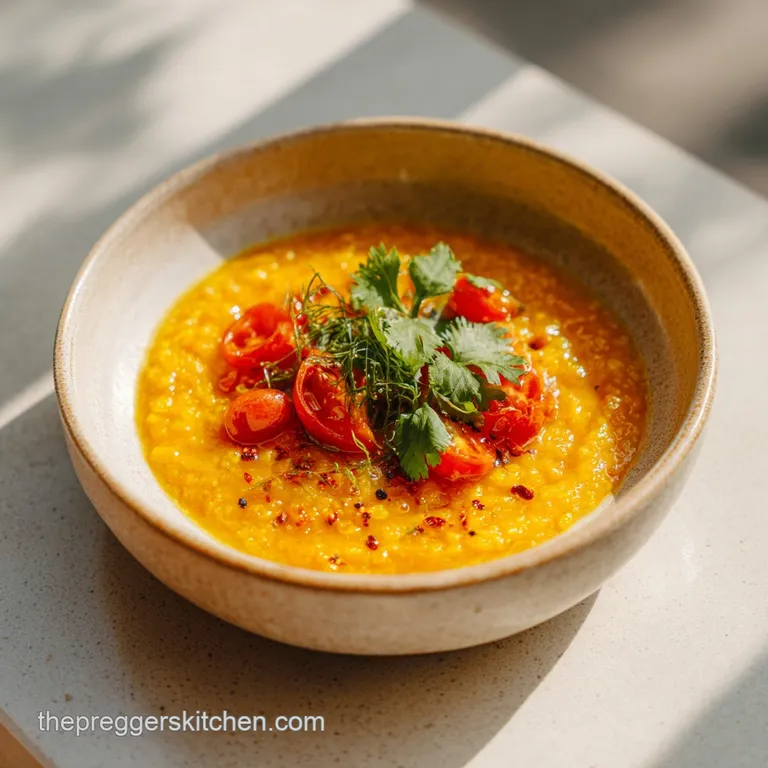
You can expect a bowl that is velvety and thick, almost like a dhal, but lightened by a splash of coconut milk and a bright hit of lemon juice. The lemon is crucial because the vitamin C it provides is the biological key that unlocks the non heme iron found in the lentils, making it easier for your body to absorb.
We aren't just making dinner here; we are optimizing every spoonful for the specific physiological demands of pregnancy. Whether you are in the thick of morning sickness or looking for a folate packed meal for the third trimester, this approach to soups for pregnancy provides the comfort and nutrition you deserve.
Nutrient Density and Precision Recipe Specs
The success of this recipe lies in the specific ratios of liquid to fiber. We are looking for a consistency that is thick enough to be satiating but fluid enough to be easily digestible. Red lentils are unique because they lack the tough outer skin found on larger legumes.
This makes them significantly easier on the gut, which is often slowed down by progesterone during pregnancy. By using exactly 4 cups of low sodium vegetable broth for every 1 cup of lentils, we achieve a porridge like consistency that feels substantial.
| Cook Method | Time | Texture | Best For |
|---|---|---|---|
| Standard Stovetop | 30 minutes | Velvety and soft | Maximum flavor control |
| Instant Pot | 15 minutes | Completely smooth | Saving active energy |
| Slow Cooker | 4 hours | Deeply integrated | Batch cooking/Meal prep |
Precision in timing ensures that the ginger retains its active compounds, gingerols and shogaols, which are the primary agents for managing nausea. Cooking them for too long at high heat can diminish their efficacy, which is why we sauté them briefly at the start and then let them steep during the simmer.
This method allows the flavors to meld without losing the biological benefits of the fresh aromatics.
Why This Wholesome Recipe Works
Understanding the "why" behind the cooking process helps you make better decisions in the kitchen. This recipe is a balance of thermodynamics and nutrition science, ensuring that each ingredient is treated in a way that maximizes its health potential.
- Aromatic Activation: Toasting the turmeric and cumin in olive oil for 60 seconds is a process called "blooming." Many of the beneficial compounds in turmeric, specifically curcumin, are fat soluble. By heating them in oil before adding the broth, you ensure they are evenly distributed and more bioavailable.
- Starch Gelatinization: Red lentils are high in starch and protein. As they simmer, the starch granules swell and eventually burst, creating a natural thickening effect without the need for flour or heavy creams. This provides a velvety texture that is easy on the stomach.
- Acid Iron Synergy: Adding the lemon juice at the very end is a deliberate choice. Heat can degrade vitamin C, so by stirring it in just before serving, you keep the acid profile high. This acid helps convert the iron in the lentils into a form that the human body can more readily use.
- Emulsification Stability: The full fat coconut milk adds a layer of healthy fats that help stabilize the spices. These fats provide a "slow release" energy source, which can help prevent the blood sugar spikes and crashes that often exacerbate pregnancy fatigue.
| Component | Science Role | Pro Secret |
|---|---|---|
| Fresh Ginger | Antiemetic agent | Grate it finely to release more juice and surface area |
| Split Red Lentils | Folate & Protein source | Rinse until the water is clear to remove excess surface starch |
| Turmeric | Anti inflammatory | Always pair with a pinch of black pepper to boost absorption |
When I first started experimenting with these flavors, I realized that many people skip the rinsing step for lentils. Trust me on this: taking 60 seconds to rinse your lentils under cold water makes a massive difference in the final texture. It prevents the soup from becoming unpleasantly "gummy" and ensures a clean, savory finish. For more ways to integrate these powerhouse ingredients into your routine, you might also enjoy this iron breakfast for pregnancy which uses similar nutritional logic.
Essential Ingredients and Smart Substitutions
Every ingredient in this recipe serves a specific purpose for your prenatal health. I have selected these based on their nutrient density and their ability to stay shelf stable, making it easier for you to cook even on low energy days.
- 1 tbsp Extra virgin olive oil: A source of healthy monounsaturated fats. Why this? It has a lower smoke point than refined oils, keeping flavors delicate.
- Substitute: Avocado oil or ghee if you prefer a nuttier flavor profile.
- 1 large Yellow onion: Provides the foundational sweetness once sautéed. Why this? Onions are rich in quercetin, a powerful antioxidant.
- Substitute: Leeks (white parts only) for a milder, more sophisticated base.
- 3 tbsp Fresh ginger: The primary tool for managing digestive discomfort. Why this? Fresh ginger has a more potent anti nausea effect than dried powder.
- Substitute: 1 tbsp ginger paste (from a jar) if grating feels too taxing.
- 3 cloves Garlic: Adds depth and immune supporting compounds. Why this? Allicin is released when garlic is minced and allowed to sit.
- Substitute: 1 tsp garlic powder, though you lose the fresh pungency.
- 1 tsp Ground turmeric: Provides a vibrant color and anti inflammatory benefits. Why this? It offers a subtle earthy warmth without being spicy.
- Substitute: A pinch of saffron for a luxurious, floral alternative.
- 1 cup Split red lentils: The protein and fiber backbone of the soup. Why this? They cook faster than any other legume, ideal for quick meals.
- Substitute: Yellow split peas, though they will require an extra 15 minutes of simmering.
- 4 cups Low sodium vegetable broth: The liquid base that controls the salt content. Why this? Controlling sodium helps prevent pregnancy related bloating.
- Substitute: Chicken bone broth for added collagen and a richer mouthfeel.
- 1 can Full fat coconut milk: Provides a creamy texture and essential fatty acids. Why this? The fat helps satiate hunger for longer periods.
- Substitute: Whole milk or heavy cream if you don't enjoy coconut flavors.
- 1 cup Fresh baby spinach: A quick cooking source of folate and iron. Why this? It wilts instantly in the residual heat of the soup.
- Substitute: Chopped kale or Swiss chard (simmer these for 5 minutes longer).
High Precision Kitchen Tools Needed
You don't need a professional kitchen to make excellent soups for pregnancy, but a few specific tools will make the process much smoother. Using a heavy bottomed pot, like a Dutch oven (I often use my Lodge 6 quart), is vital.
The thick walls distribute heat evenly, which prevents the lentils from sticking to the bottom and burning during the 20 minute simmer.
A high-quality microplane or fine grater is also a must have for the ginger. When you grate ginger finely, you break down the tough fibers, ensuring you get the juice and the flavor without any woody "bits" in your soup.
If you prefer a completely smooth texture, an immersion blender is the most efficient way to achieve it without the mess of transferring hot liquid to a traditional blender.
step-by-step Guidance for Best Results

Following these steps in order ensures that you build flavor layers while preserving the nutritional integrity of the ingredients. Pay close attention to the visual cues provided.
- Prep the base. Finely dice the yellow onion and grate the ginger and garlic. Rinse the red lentils in a fine mesh sieve under cold water until the water runs clear. Note: Rinsing removes saponins which can cause a bitter taste.
- Sauté the aromatics. Heat the olive oil in a large pot over medium heat. Add the onion and cook for 5 minutes until translucent and soft.
- Activate the spices. Stir in the grated ginger, garlic, turmeric, and cumin. Toast for 60 seconds until the kitchen smells fragrant and earthy.
- Combine ingredients. Add the rinsed lentils and the 4 cups of vegetable broth. Stir well to ensure no lentils are stuck to the bottom.
- Simmer. Bring the mixture to a boil, then immediately turn the heat down to low. Cover with a tight fitting lid.
- Cook. Simmer for 15 to 18 minutes. The lentils are done when they have completely softened and the soup looks thick.
- Finish with fat. Pour in the full fat coconut milk and stir. The soup should turn a beautiful golden creamy color.
- Add greens. Stir in the chopped spinach. Cook for 1 to 2 minutes until the spinach is wilted and bright green.
- Brighten the flavor. Remove the pot from the heat and stir in the lemon juice and salt. Taste and adjust seasoning if necessary.
- Blend (Optional). If you prefer a silky texture, use an immersion blender for 30 seconds directly in the pot.
Preventing Common Preparation Errors
Even a simple soup can go wrong if you lose track of the details. The most frequent issue I see is related to the texture of the lentils. If the heat is too high, the liquid evaporates before the lentils can fully soften, leaving you with a gritty finish.
Always keep the heat on a "gentle" simmer just a few bubbles breaking the surface.
Why Your Soup Feels Gritty
If the lentils haven't broken down, they usually just need more time or a bit more liquid. However, old lentils can sometimes resist softening regardless of how long you cook them.
| Problem | Root Cause | Solution |
|---|---|---|
| Soup is too thick | Excess evaporation or high heat | Stir in 1/2 cup of broth or water to loosen |
| Lentils are crunchy | Underdone or old legumes | Simmer for 5 more mins covered; add a splash of water |
| Flavor is flat | Lack of acidity or salt | Add an extra squeeze of lemon or a pinch of salt |
Common Mistakes Checklist
- ✓ Don't skip the rinsing of the lentils; it prevents a "dusty" or bitter aftertaste.
- ✓ Ensure the ginger is fresh; older ginger becomes woody and loses its anti nausea potency.
- ✓ Avoid boiling the soup once the coconut milk is added, as high heat can cause the coconut fat to separate.
- ✓ Stir the bottom of the pot every few minutes during the simmer to prevent the starches from sticking.
- ✓ Add the lemon juice only at the very end to preserve the Vitamin C and the bright flavor profile.
Scaling the Recipe for Your Needs
Adjusting this recipe is straightforward, but you must be mindful of the liquid to solid ratio. For another light option that scales well, consider my pregnancy breakfast smoothie which is also great for batch prep.
Scaling Down (Making 1-2 Servings): If you are cooking just for yourself, you can easily halve the ingredients. Use a smaller saucepan to prevent the liquid from evaporating too quickly. You only need to reduce the cook time by about 2 or 3 minutes.
If a recipe calls for half an egg (not used here, but good to know), beat it and measure out half.
Scaling Up (Making 8 Servings): When doubling the recipe, do not simply double the salt and spices. Start with 1.5x the amount of cumin and turmeric, then taste at the end.
You will likely need the full 2 cups of lentils and 8 cups of broth, but use a larger stockpot to ensure there is enough surface area for the lentils to move. The cook time will remain roughly the same, but it will take longer to reach a boil initially.
Nutritious Variations for Every Trimester
Every stage of pregnancy brings different cravings and requirements. You can adapt this base recipe to better suit your current needs without losing the core benefits.
- The Protein Boost: If you are in the second trimester and need extra protein, stir in 1 cup of cooked shredded chicken or some sautéed firm tofu at the end. This adds texture and helps meet your increased amino acid requirements.
- The Iron Powerhouse: To further increase the iron content, replace half of the spinach with finely chopped kale or collard greens. These heartier greens contain more minerals, though they do require an extra 5 minutes of simmering.
- The Calorie Dense Option: For those struggling to gain weight, add 1/2 cup of cooked quinoa directly into the soup. The quinoa absorbs the flavors and adds a pleasant "pop" to the texture while providing complex carbohydrates.
If you are looking for a more substantial evening meal that still feels light on the stomach, this salmon and spinach bake is an excellent companion to a soup heavy diet. It offers the omega-3s that lentils lack, making for a well rounded weekly menu.
| Variation | Added Benefit | Best For |
|---|---|---|
| Extra Ginger | Enhanced anti nausea | First trimester morning sickness |
| Add Bone Broth | Collagen & Gut health | Postpartum recovery |
| Add Quinoa | Sustained energy | Third trimester fatigue |
Debunking Common Kitchen Myths
There is a lot of misinformation surrounding legumes and pregnancy. Let's clear up a few things so you can cook with confidence.
Myth: Lentils must be soaked overnight to be digestible. This is true for larger beans like kidney beans or chickpeas, but split red lentils are small and have their hulls removed.
They cook so quickly that soaking actually ruins their texture, turning them into a mushy paste before they even hit the pot.
Myth: You shouldn't eat spicy food during pregnancy. While some women find that very hot spices trigger heartburn, mild warming spices like turmeric, cumin, and ginger are generally very well tolerated. In fact, ginger is one of the most clinically studied natural remedies for pregnancy related nausea.
Myth: Canned coconut milk is "unhealthy" fat. The medium chain triglycerides (MCTs) found in coconut milk are a great source of efficient energy. During pregnancy, your body needs a variety of healthy fats for fetal brain development and to help you absorb fat soluble vitamins like A, D, E, and K.
Safe Storage and Reheating Guidelines
This soup is a meal prep dream. It actually tastes better the next day as the spices have more time to infuse into the lentils.
Storage: Keep the soup in an airtight glass container in the refrigerator for up to 4 days. Note that the lentils will continue to absorb liquid as they sit, so the soup will thicken significantly.
When you go to reheat it, you may need to add a splash of water or broth to return it to your desired consistency.
Freezing: This recipe freezes beautifully for up to 3 months. I recommend freezing it in individual portions using silicone molds or freezer safe bags. To use, thaw overnight in the fridge or defrost directly in a saucepan over low heat.
Zero Waste Tip: Don't throw away the cilantro stems or the rest of the spinach bunch. You can blend the stems directly into the soup for extra flavor, or toss any wilting spinach into a morning smoothie.
If you have leftover coconut milk, freeze it in an ice cube tray to use in future smoothies or curries.
Optimal Serving and Pairing Suggestions
When serving soups for pregnancy, presentation can actually help with appetite. A small swirl of coconut milk on top and a few fresh cilantro leaves make the bowl look inviting even when you aren't feeling your best.
Pair a warm bowl of this soup with a side of toasted sourdough bread or a simple piece of naan. The carbohydrates in the bread help provide an immediate energy source, while the fiber in the lentils ensures that energy lasts.
If you are experiencing severe nausea, try sipping the broth part of the soup first before moving on to the lentils. The warmth and the ginger will help settle your stomach, making it easier to finish the rest of the meal.
For a complete day of pregnancy safe eating, remember that staying hydrated is key; a simple ginger tea or a glass of water with lemon will complement the flavors of this dish perfectly.

Recipe FAQs
Which soups are best for managing high cholesterol and triglycerides?
Focus on high fiber, plant based options. Lentil based soups are excellent because their soluble fiber helps bind cholesterol, and using healthy fats like olive oil instead of animal fats keeps triglyceride levels stable.
What soup is recommended for maintaining healthy blood pressure?
Prioritize low-sodium recipes rich in potassium. This soup uses turmeric and ginger, which offer anti inflammatory benefits, while the low-sodium broth ensures you aren't consuming excess salt that can impact pressure levels.
What makes a meal healthy for a pregnant woman?
Aim for a balance of complex carbohydrates, lean protein, and healthy fats. This dish provides sustained energy through lentils and essential nutrients from fresh spinach; for another balanced option, try our nutritious salmon meal that emphasizes omega-3s.
Which ingredients help alleviate constipation during pregnancy?
High fiber foods are your best ally. Red lentils contain both soluble and insoluble fiber, which promote healthy digestion and regularity throughout your pregnancy.
How to achieve the perfect smooth consistency?
Simmer until the lentils break down completely into a porridge like state. If you prefer an ultra smooth, creamy texture, use an immersion blender at the very end after adding the coconut milk.
How to prevent the coconut milk from separating during cooking?
Stir in the coconut milk after removing the pot from high heat. Avoid boiling the soup once the milk is added, as extreme temperatures can cause the coconut fat to break and lose its silky texture.
Is it true I should skip rinsing the lentils to save time?
No, this is a common misconception that ruins flavor. Rinsing your lentils under cold water until it runs clear is essential for removing saponins, which can otherwise leave a bitter, dusty aftertaste in your finished soup.
Ginger Red Lentil Soup

Ingredients:
Instructions:
Nutrition Facts:
| Calories | 454 calories |
|---|---|
| Protein | 16 g |
| Fat | 25 g |
| Carbs | 43 g |
| Fiber | 17 g |
| Sugar | 5 g |
| Sodium | 375 mg |
