Salmon Asparagus Foil Packets with Garlic
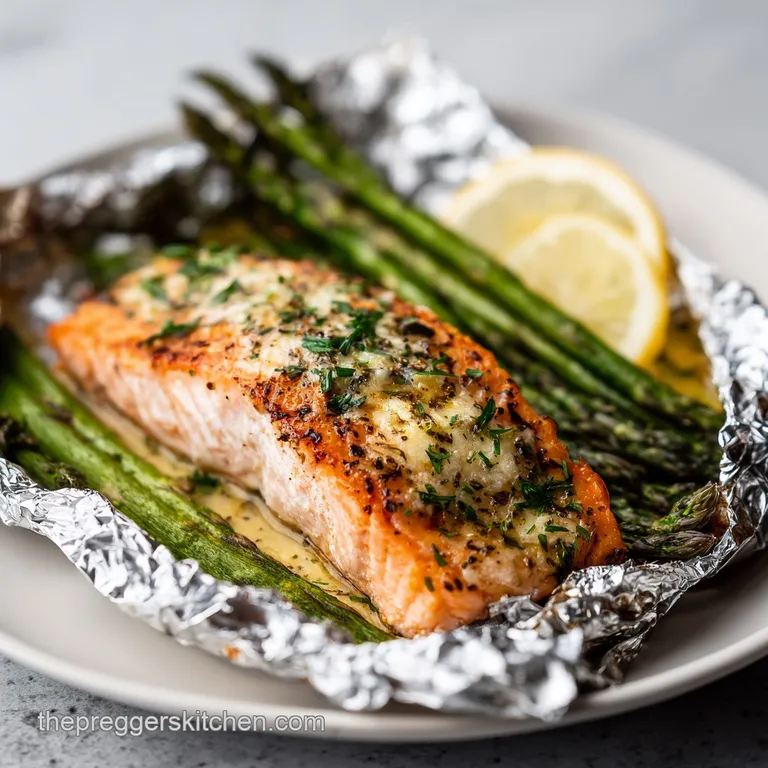
- Time: Active 10 minutes, Passive 12 minutes, Total 22 minutes
- Flavor/Texture Hook: Flaky, buttery salmon with snappy, vibrant asparagus
- Perfect for: Stress free weeknight dinners or nutrient dense meal prep
- Mastering Healthy Salmon Asparagus Foil Packets for Dinner
- Science of the Steam Chamber
- Component Analysis for Better Nutrition
- Wholesome Ingredients for Better Nutrition
- Necessary Tools for Easy Cleanup
- Precision Steps for Flaky Results
- Fixing Common Salmon Cooking Failures
- Nutrition Focused Flavor Adaptation Ideas
- Safe Storage and Zero Waste
- Perfect Nutrient Dense Meal Pairings
- Common Cooking Myths
- Recipe FAQs
- 📝 Recipe Card
Mastering Healthy Salmon Asparagus Foil Packets for Dinner
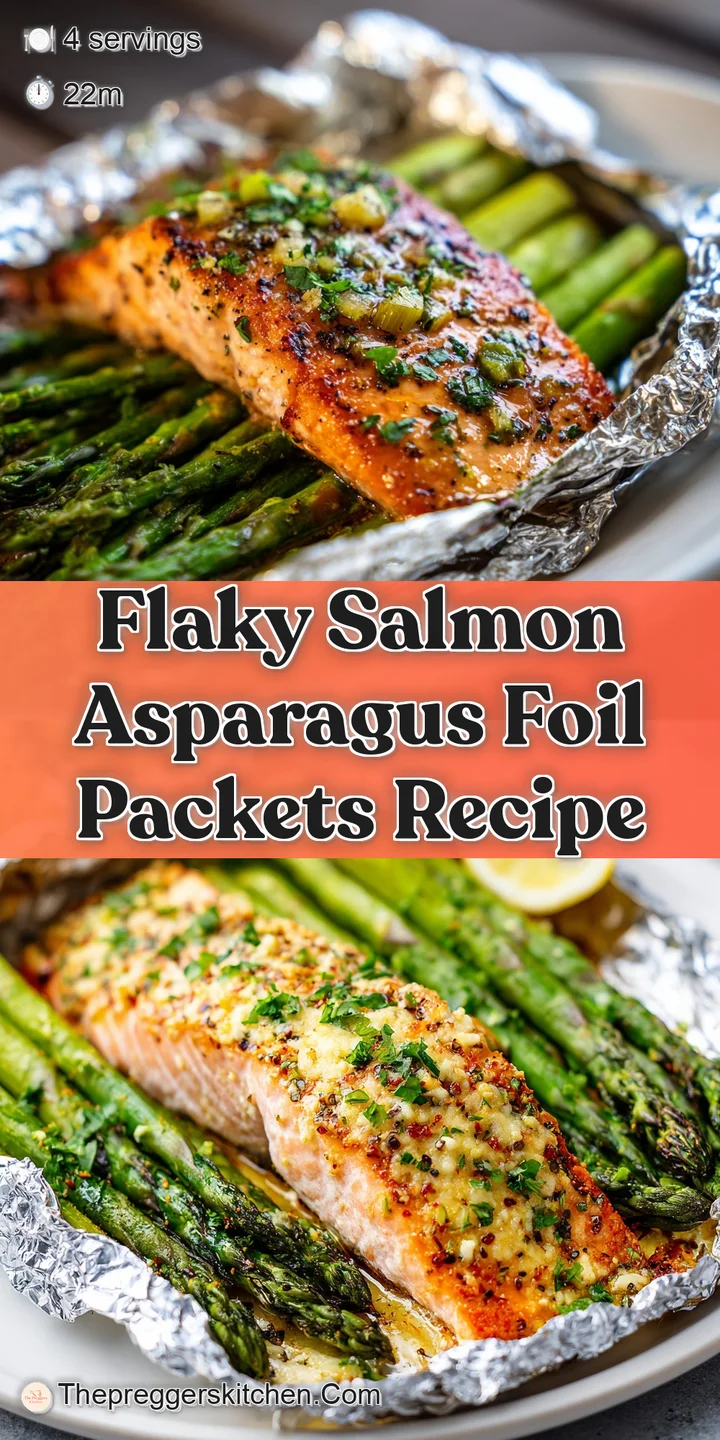
Imagine the sound of heavy duty foil crinkling as you seal up a little silver envelope of goodness. There’s something so satisfying about sliding a tray into the oven, knowing that in exactly 12 minutes, you’ll be met with the bright, citrusy aroma of lemon and garlic.
I remember the first time I tried this; I was so worried the fish would turn into a rubbery mess, but the steam trapped inside does all the heavy lifting for you.
We've all been there trying to cook fish on a pan only to have it stick, or worse, watching the edges of your asparagus turn to mush while the center of the salmon is still icy. This recipe solves that by using the physics of steam.
It’s a reliable, wholesome way to get a folate packed dinner on the table with almost zero cleanup.
Trust me, once you see how the butter and lemon juice emulsify into a velvety sauce right inside the packet, you’ll never go back to basic baking. We’re focusing on preserving the integrity of the ingredients here, ensuring every bite is iron rich and full of healthy fats.
It’s brilliant, it’s fast, and it’s virtually foolproof if you follow the precision checkpoints I’ve learned the hard way.
Science of the Steam Chamber
Convection Steam Hybrid: The foil creates a sealed environment where moisture cannot escape, forcing the internal temperature to rise evenly through steam conduction rather than dry air.
Myofibrillar Preservation: By surrounding the salmon with lemon slices and steam, we prevent the protein fibers (myofibrils) from tightening too quickly, which is what causes that white "albumen" to leak out.
Chlorophyll Stabilization: The rapid 12 minute cook time at high heat (400°F) softens the asparagus cellulose while keeping the chlorophyll intact, preventing that dull, gray green color of overcooked veggies.
| Cook Method | Time | Texture | Best For |
|---|---|---|---|
| Oven (400°F) | 12 minutes | Flaky and moist | Consistent, even results for 4+ servings |
| Stovetop (Cast Iron) | 10 minutes | Charred bottom, steamed top | A smoky flavor but requires high heat |
| Air Fryer (375°F) | 8 minutes | Crispier edges | Cooking for one or two people quickly |
Deciding which method to use depends on your equipment, but for 4 (6 oz) salmon fillets, the oven is the gold standard for temperature control. If you’re looking for a refreshing drink to pair with this while the oven does the work, a Non Alcoholic Mimosa in recipe adds a wonderful brightness to the meal.
Component Analysis for Better Nutrition
| Ingredient | Science Role | Pro Secret |
|---|---|---|
| Salmon Fillets | Primary Protein/Fat | Bring to room temp for 15 mins before cooking to prevent the "cold core" center. |
| Fresh Asparagus | Structural Fiber | Use "standard" thickness spears; pencil thin ones will vanish into mush in 12 minutes. |
| Fresh Lemon | Acid Catalyst | The citric acid breaks down the "fishy" trimethylamine, leaving only clean flavor. |
| Unsalted Butter | Fat Emulsifier | Melts with the lemon juice and salmon fats to create a velvety, self basting sauce. |
When you're sourcing your fish, look for 4 (6 oz) salmon fillets that are roughly the same thickness. This is the first precision checkpoint: if one fillet is 2 inches thick and another is 1 inch, they won't finish at the same time. Aim for a uniform "center cut" if possible. This attention to detail is similar to what I look for when making a Safe Sushi Bowl recipe, where ingredient integrity is everything.
Wholesome Ingredients for Better Nutrition
- 4 (6 oz) salmon fillets: Approximately 680g total. Why this? Rich in Omega-3s and iron rich protein for cellular health.
- Substitute: Arctic Char (similar fat content and flaky texture).
- 1 lb fresh asparagus spears: Woody ends trimmed (450g). Why this? Excellent source of folate and prebiotic fiber.
- Substitute: Broccolini (adds a slightly sweeter, earthy crunch).
- 2 large lemons: One sliced into rounds, one juiced. Why this? Provides the acid needed to tenderize the fish proteins.
- Substitute: Lime (adds a tropical, zingy note to the butter).
- 4 tbsp unsalted butter: Melted (56g). Why this? Carries the fat soluble aromatics like garlic and dill.
- Substitute: Ghee (higher smoke point and nutty, browned butter flavor).
- 3 cloves garlic: Minced. Why this? Contains allicin, which offers cardiovascular support.
- Substitute: Shallots (for a softer, more sophisticated sweetness).
- 2 tbsp fresh dill or parsley: Finely chopped. Why this? Fresh herbs provide antioxidants and a cooling finish.
- Substitute: Fresh Thyme (gives an earthy, woodsy aroma).
- 1 tsp kosher salt: For seasoning.
- 0.5 tsp cracked black pepper: For a gentle heat.
Necessary Tools for Easy Cleanup
For this recipe, your most important tool is actually the foil itself. I highly recommend using heavy duty aluminum foil. Standard foil is prone to tearing when you're folding the edges, and if the steam escapes, the salmon will dry out in seconds.
You’ll also need a large rimmed baking sheet not for the cooking itself, but to catch any potential leaks from the packets.
A sharp chef's knife is essential for trimming the woody ends of the 1 lb fresh asparagus. If you bend an asparagus spear, it will naturally snap at the point where it becomes tough and fibrous; use that as your guide for where to cut the whole bunch. Finally,, an instant read meat thermometer is your best friend.
It’s the only way to be 100% sure your salmon has reached the safe, flaky internal temp of 145°F without cutting into it and letting all those velvety juices escape.
Precision Steps for Flaky Results
1. Prepare the Aromatics
Whisk together the 4 tbsp unsalted butter (melted), the juice of one lemon, and the 3 cloves of minced garlic in a small bowl. Add half of your 2 tbsp fresh dill. Note: Mixing the herbs into the fat helps the flavor permeate the entire fillet.
2. Assemble the Foundation
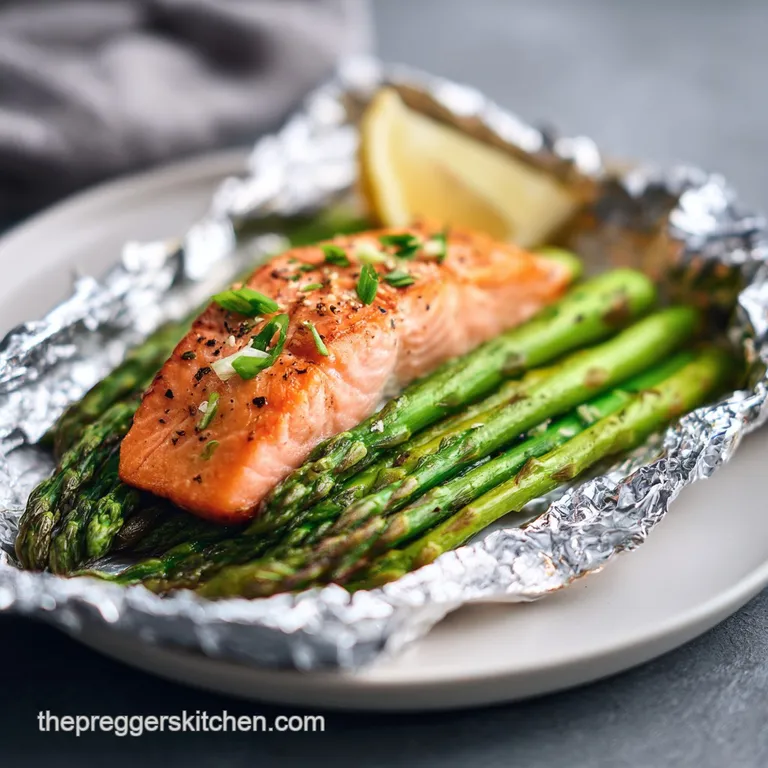
Lay out four 12x12 inch sheets of heavy duty foil. Divide the 1 lb fresh asparagus evenly among the sheets, placing them in the center to create a "raft" for the fish.
3. Season and Seal
Place one 6 oz salmon fillet on top of each asparagus raft. Sprinkle evenly with the 1 tsp kosher salt and 0.5 tsp cracked black pepper.
4. Drizzle and Garnish
Spoon the garlic butter mixture over the fillets. Top each with 2-3 lemon rounds from the second lemon. Notice how the lemon slices act as a secondary shield against direct heat.
5. Create the Steam Chamber
Bring the sides of the foil together and fold them down tightly. Fold the ends inward to create a completely sealed, airtight pouch. Note: Leave a little bit of "headspace" inside the packet so the steam can circulate.
6. The Precision Bake
Place the packets on a baking sheet and bake at 400°F until the foil is puffed up and taut. This usually takes exactly 12 minutes.
7. The Visual Check
Carefully open one packet (watch for the steam!). The salmon should look opaque and the asparagus should be a vibrant, bright green.
8. The Temperature Check
Insert your thermometer into the thickest part of the salmon. It is done when it hits 145°F. The fish will continue to cook slightly while resting.
9. The Resting Phase
Let the packets sit, unopened, for 3 minutes before serving. This allows the juices to redistribute back into the protein fibers.
10. The Final Flourish
Open the packets, sprinkle with the remaining fresh dill, and serve immediately. The bottom of the packet will be filled with a delicious, nutrient dense broth.
Fixing Common Salmon Cooking Failures
Why Your Asparagus is Mushy
This usually happens because the asparagus was too thin or the salmon fillet was too thick. If you have very thin "pencil" asparagus, they only need about 6-8 minutes of heat, but a thick salmon fillet needs 12.
To fix this, use thicker asparagus spears (about the diameter of your pinky finger) or cut the salmon into smaller portions so it cooks faster.
Why Your Salmon is Dry
Dry salmon is almost always a result of overcooking or a broken seal. If the steam escapes the foil, you're essentially roasting the fish in dry air, which saps moisture. Ensure your folds are tight!
Also, remember the carryover cooking; pull the fish at 140°F and let it rest to hit 145°F naturally.
| Problem | Root Cause | Solution |
|---|---|---|
| Fish sticks to foil | Lack of fat or moisture | Place fish on the "asparagus raft" or lightly grease the foil with oil. |
| Metallic taste | Acid reacting with cheap foil | Use heavy duty foil and ensure lemon slices are between the fish and the metal. |
| Gray/Oily liquid | Albumin (protein) leakage | Cook at a slightly lower temp or don't overcook; albumin appears when fibers contract too hard. |
Common Mistakes Checklist
- ✓ Never use frozen salmon without thawing it completely (leads to soggy, uneven cooking).
- ✓ Don't skip the "resting" phase - 3 minutes is the difference between dry and velvety.
- ✓ Avoid stacking packets on the baking sheet; they need airflow to cook evenly.
- ✓ Pat the salmon dry with a paper towel before adding the butter to help the seasoning stick.
- ✓ Trim at least 1-2 inches off the asparagus to avoid the woody, bitter ends.
Nutrition Focused Flavor Adaptation Ideas
For a Mediterranean Twist
Swap the dill for fresh oregano and add a tablespoon of sliced kalamata olives and halved cherry tomatoes to each packet. The tomatoes will burst and create a beautiful, lycopene rich sauce that pairs perfectly with the lemon and garlic.
For a Spicy Garlic Soy Kick
Instead of butter, use a mixture of sesame oil, low sodium soy sauce, and a teaspoon of sriracha or red pepper flakes. This version skips the dairy and leans into the savory, umami rich notes of the soy, which is fantastic for heart health.
For a Low Carb/Keto Boost
Increase the butter to 1.5 tbsp per packet and add a sprinkle of parmesan cheese over the asparagus before sealing. The fat content helps with nutrient absorption, particularly for the vitamin K found in the asparagus.
Chef Tip: If you want a bit of a "crust" on your salmon, you can sear the fillets in a hot pan for 60 seconds per side before placing them in the foil packets. It adds a Maillard reaction depth that you can't get from steaming alone.
Safe Storage and Zero Waste
Storage Guidelines: You can keep these Salmon Asparagus Foil Packets in the fridge for up to 3 days. I recommend keeping them in their foil packets and placing those inside an airtight container. This keeps the salmon from drying out in the refrigerator's cold, dry air.
To reheat, don't use the microwave it will turn the fish rubbery. Instead, place the foil packet back in a 350°F oven for 8-10 minutes.
Zero Waste Tips: Don't throw away those asparagus ends! The woody parts you trimmed off are packed with flavor. Throw them into a freezer bag and save them for your next batch of vegetable broth. Similarly, the leftover lemon rinds can be tossed into a jar of white vinegar to create a natural, citrus scented kitchen cleaner after a few weeks of steeping. If you have half a salmon fillet left over, flake it into a salad the next day with my Pregnancy Safe Caesar recipe.
Perfect Nutrient Dense Meal Pairings
This dish is quite complete on its own, but if you're looking to round out the plate, a complex carbohydrate is the way to go. A scoop of quinoa or wild rice is excellent for soaking up that garlic butter sauce left at the bottom of the foil. The earthy tones of wild rice really complement the fresh dill.
If you're keeping things low carb, a simple side of cauliflower mash or a crisp cucumber salad works wonders. The coolness of a cucumber salad provides a nice textural contrast to the warm, flaky salmon. If you're feeling adventurous with your condiments, a small side of Homemade Pickles in recipe can provide a probiotic boost that aids in the digestion of this protein heavy meal.
The "If you want X, do Y" Decision Shortcut: If you want maximum crispiness, sear the salmon for 1 minute per side before putting it in the foil. If you want a faster cleanup, use parchment paper inside the foil to prevent any sticking whatsoever.
If you want a more intense lemon flavor, zest the lemon before juicing it and add the zest to the butter mixture.
Common Cooking Myths
Myth: Foil packets are only for the grill. Truth: The oven is actually superior for temperature control. While the grill adds a smoky element, the consistent 400°F of a home oven ensures that the 1 lb fresh asparagus doesn't burn before the 6 oz salmon fillets are cooked through.
Myth: You should always cook salmon until it "flakes with a fork." Truth: By the time it easily flakes with a fork, it is often already overcooked and dry. The best way to check is with a thermometer.
If you wait for the "flake," the carryover cooking will take the internal temp well past 150°F, leading to a loss of those velvety juices.
Myth: Fresh salmon is always better than frozen. Truth: high-quality "flash frozen" salmon is often fresher than the "fresh" fish at the counter, which may have been sitting on ice for days.
Just ensure you thaw it slowly in the fridge for 24 hours before making your asparagus foil packets.
Recipe FAQs
What is the ideal internal temperature for the salmon?
145°F. Insert a thermometer into the thickest part; the fish will continue to cook slightly after you remove it from the oven.
How do I prevent the asparagus from turning mushy?
Use standard thickness spears. Pencil thin asparagus will break down too much during the 12-minute cook time.
How long should the packets bake at 400°F?
Exactly 12 minutes. This time frame ensures the steam fully cooks the salmon while keeping the asparagus vibrant green.
How to assemble the foil packets for the best steam seal?
Bring the sides together and fold them down tightly, then fold the ends inward. The seal must be airtight to trap the steam required for moist cooking.
Is it true that I must use heavy duty foil for this recipe?
Yes, heavy duty foil is highly recommended. Standard foil tears easily when folding, allowing steam to escape and resulting in dry salmon.
How long can I safely store leftovers in the refrigerator?
Up to 3 days. Store them in their original foil packets inside an airtight container to prevent the salmon from drying out in the cold air.
How do I reheat leftovers without ruining the texture?
Bake them in the oven at 350°F for 8 to 10 minutes. Avoid the microwave, as it tends to turn the delicate fish rubbery.
Salmon Asparagus Foil Packets
Ingredients:
Instructions:
Nutrition Facts:
| Calories | 486 kcal |
|---|---|
| Protein | 36.8 g |
| Fat | 33.5 g |
| Carbs | 6.8 g |
| Fiber | 2.4 g |
| Sugar | 2.1 g |
| Sodium | 658 mg |
