Gestational Diabetes Breakfast Idea with Avocado and Eggs
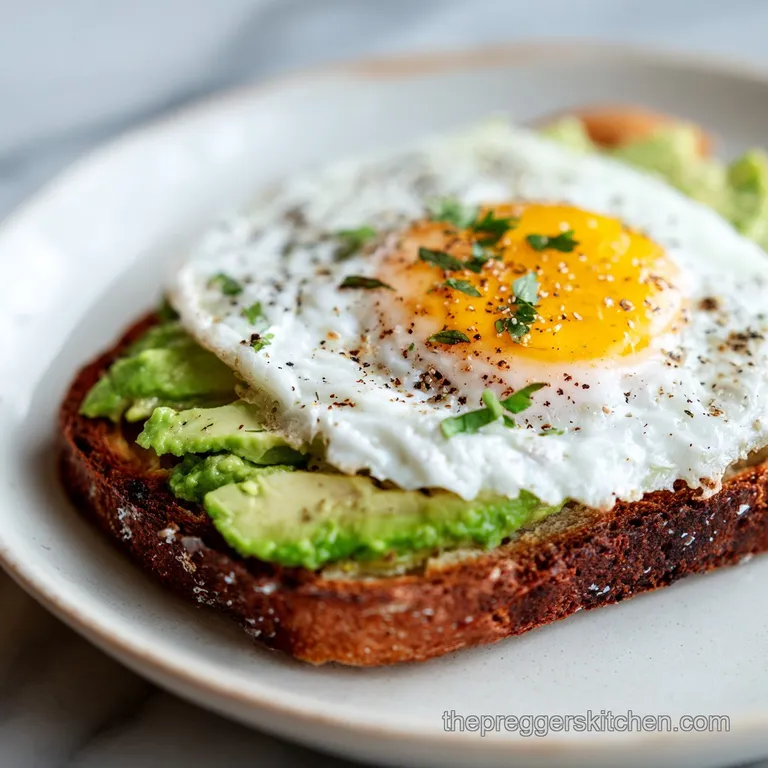
- Time: Active 5 minutes, Passive 5 minutes, Total 10 minutes
- Flavor/Texture Hook: Nutty, velvety, and savory with a peppery kick
- Perfect for: Rapid weekday fuel and consistent glycemic control
- The Biochemistry of the Glucose Buffer
- Nutritional Metrics and Time Efficiency
- Selecting Nutrient Dense Elements for Success
- Essential Tools for a Precise Morning Routine
- Step by Step Guide from Prep to Plate
- Avoiding Common Pitfalls and Maximizing Nutrients
- Adjusting Flavors Without Spiking Your Insulin
- Proper Handling for Freshness and Food Safety
- Pairing Your Breakfast for Optimal Wellness
- High in Sodium
- Recipe FAQs
- 📝 Recipe Card
The Biochemistry of the Glucose Buffer
The Physics of the Lipid Barrier: Healthy fats from avocado slow down the process of gastric emptying, which means carbohydrates enter the bloodstream at a much slower, more manageable pace. This mechanism prevents the rapid insulin demand that often triggers a spike and crash cycle after breakfast.
The Protein Buffer for Insulin Sensitivity: high-quality protein from eggs stimulates the release of glucagon like peptide-1 (GLP-1), a hormone that enhances insulin secretion in response to glucose.
This synergistic effect ensures your body processes the energy from the sprouted bread efficiently without overwhelming your system.
| Method | Time | Texture | Best For |
|---|---|---|---|
| Stovetop Skillet | 5 mins | Crispy edges, runny yolk | Immediate consumption |
| Toaster Oven | 8 mins | Evenly golden, firmer yolk | Hands off morning prep |
| Air Fryer | 6 mins | Shatter crisp crust | Maximum texture contrast |
Choosing between the stovetop and the oven mostly comes down to how much you want to "babysit" the eggs. While the skillet offers that classic, buttery sizzle and precise yolk control, the toaster oven is a fantastic fallback for those mornings when you’re busy packing a bag or checking emails.
Both methods preserve the integrity of the folate packed ingredients, though the stovetop tends to yield a more velvety finish for the eggs themselves.
Nutritional Metrics and Time Efficiency
When managing a condition like gestational diabetes, precision isn't just a preference - it's a requirement for wellness. We are looking for a specific balance of 18 grams of protein and 6 grams of fiber to ensure the 20 grams of carbohydrates don't hit the bloodstream all at once.
This recipe hits those targets perfectly while keeping the prep time under five minutes, which is essential when morning nausea or fatigue is a factor.
| Component | Science Role | Pro Secret |
|---|---|---|
| Pasture raised Eggs | Choline & Protein | Cook on medium low to prevent rubbery proteins |
| Sprouted Grain Bread | Low Glycemic Index | Freeze bread first to increase resistant starch |
| Ripe Avocado | Monounsaturated Fats | Add lemon juice to prevent enzymatic browning |
| Extra Virgin Olive Oil | Polyphenol Antioxidants | Drizzle at the end to preserve heat sensitive nutrients |
I have found that the quality of the bread makes or breaks the glucose response. Sprouted grains, like those found in Ezekiel bread, use the entire grain, which keeps the bran and germ intact. This structural integrity means your enzymes have to work harder to break it down, leading to a much flatter glucose curve.
It's a small change that yields a massive difference in how you feel by 11:00 AM.
Selecting Nutrient Dense Elements for Success
The foundation of this meal is 1 slice of sprouted grain bread. I always suggest looking for brands that list sprouted wheat, rye, or barley as the first ingredient to ensure you’re getting the maximum fiber benefit.
For the fats, you'll need 1/2 small ripe avocado, which should yield to gentle pressure without feeling mushy. If it's too hard, the texture won't be velvety; if it's too soft, the flavor can turn slightly metallic.
- 1 slice Sprouted grain bread (Substitute: Sourdough bread - Why this? Why this? Natural fermentation in sourdough also lowers the glycemic index compared to white bread.)
- 1/2 small ripe avocado (Substitute: 1/4 cup Hummus - Why this? Why this? Provides similar creamy texture and healthy fats if avocados are out of season.)
- 1 tsp Extra virgin olive oil (Substitute: Avocado oil - Why this? Why this? High smoke point and neutral flavor profile for searing eggs.)
- 2 large pasture raised eggs (Substitute: 1/2 cup Silken tofu scramble - Why this? Why this? A solid plant based protein alternative with a similar soft texture.)
- 1 tsp Grass fed butter (Substitute: Ghee - Why this? Why this? Lactose free and provides a rich, nutty aroma during the browning process.)
- 1/4 tsp Sea salt (Substitute: Himalayan pink salt - Why this? Why this? Contains trace minerals that support electrolyte balance during pregnancy.)
- 1/4 tsp Red pepper flakes (Substitute: Smoked paprika - Why this? Why this? Adds depth and warmth without the intense heat of chili flakes.)
- 1/2 tsp Everything Bagel Seasoning (Substitute: Toasted sesame seeds - Why this? Why this? Adds crunch and healthy minerals without the added garlic/onion salt.)
- 1/2 tsp fresh lemon juice (Substitute: Lime juice - Why this? Why this? The acidity prevents the avocado from oxidizing and brightens the fats.)
Chef's Tip: If your avocado is a day away from being perfect, place it in a paper bag with a banana overnight. The ethylene gas will speed up the softening process, giving you that buttery consistency just in time for breakfast.
Essential Tools for a Precise Morning Routine
You don't need a professional kitchen, but a few specific tools will ensure the eggs don't stick and the bread achieves that perfect shatter. I always reach for an 8 inch non stick skillet or a well seasoned cast iron pan.
Cast iron is particularly great for pregnancy because it can actually contribute a tiny bit of dietary iron to your meals, which is a win for your blood volume.
A wide, flexible spatula is also a must have for flipping the eggs without puncturing the yolk. You want the yolk to remain intact until it hits the toast. Finally,, a small ceramic bowl for mashing the avocado allows you to control the consistency - some people love a chunky mash, while I prefer it whipped into a silky spread.
| Problem | Cause | Fix |
|---|---|---|
| Rubbery Eggs | Heat is too high | Lower flame, remove from heat early |
| Soggy Toast | Avocado too watery | Pat avocado dry before mashing |
| Sticking Eggs | Pan not preheated | Wait for butter to stop foaming |
Having these basics ready saves you from the "morning scramble" of looking for a clean pan while your blood sugar is already signaling for food. It makes the whole process feel intentional rather than chaotic.
step-by-step Guide from Prep to Plate
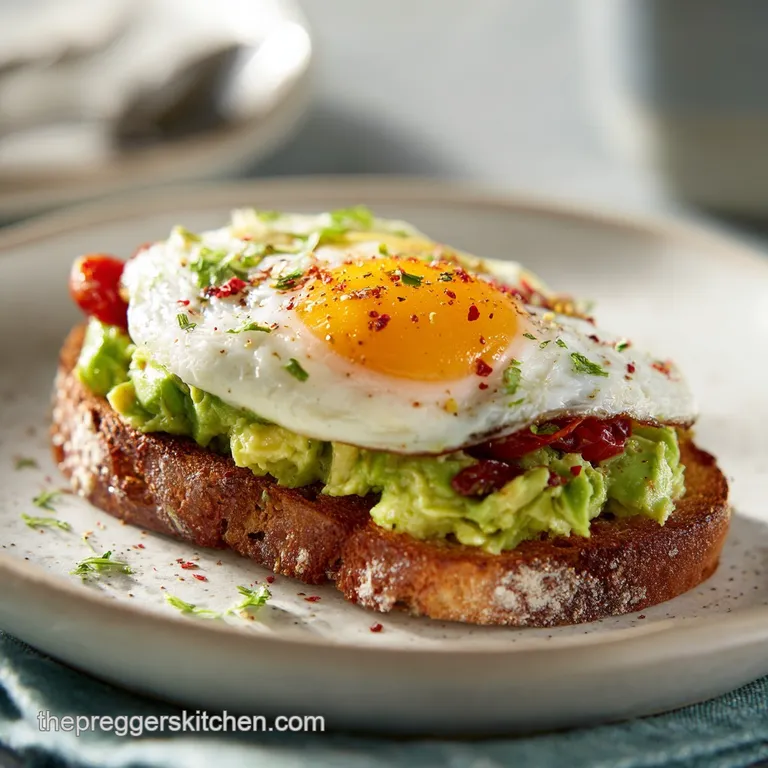
- Toast [sprouted grain bread]. Place the slice in the toaster or under a broiler until the edges are dark gold and the surface feels rigid. Note: Toasting longer increases the "shatter" factor which contrasts beautifully with the soft avocado.
- Mash [avocado]. Scoop the 1/2 avocado into a small bowl and add [lemon juice] and a pinch of [sea salt]. Mash until mostly smooth with a few small chunks remaining.
- Heat [skillet]. Place your pan over medium low heat and add [grass fed butter]. Wait until the butter melts and the small bubbles subside.
- Crack [eggs]. Gently drop the 2 eggs into the skillet. Note: Cracking them into a separate ramekin first prevents shell fragments from entering the pan.
- Cook [eggs]. Leave the eggs undisturbed for about 3 minutes until the whites are opaque and set but the yolks still jiggle.
- Spread [avocado mixture]. While the eggs finish, spread the seasoned avocado mash evenly over the warm toast.
- Drizzle [olive oil]. Lightly coat the avocado layer with [extra virgin olive oil]. Look for a glistening, silky sheen on the surface.
- Slide [eggs]. Use a spatula to carefully lift the eggs and place them onto the avocado covered toast.
- Season [toppings]. Sprinkle the [red pepper flakes] and [Everything Bagel Seasoning] over the top. Enjoy immediately while the yolk is warm and fluid.
Avoiding Common Pitfalls and Maximizing Nutrients
The most common error I see is people overcooking the eggs until the yolk is powdery. In this recipe, the liquid yolk acts as a natural sauce that hydrates the dense sprouted bread.
If you're concerned about raw yolks during pregnancy, simply cook them "over medium" where the white is fully firm and the yolk is jammy but not runny. This satisfies safety standards while maintaining that velvety mouthfeel.
Another sneaky issue is the "hidden sugar" in seasonings. Some pre mixed bagel seasonings or hot sauces contain maltodextrin or sugar, which can cause an unexpected rise in your numbers. Always check your labels to ensure your flavor boosters are spike free.
Why Your Avocado Turns Gray
Oxidation is the enemy of a beautiful breakfast. When the cells in the avocado are cut, they react with oxygen. To prevent this, always add your lemon juice immediately after mashing. The ascorbic acid acts as a barrier, keeping your breakfast looking vibrant and appetizing.
Why Your Eggs Stick to the Pan
This usually happens because the pan wasn't properly seasoned or the temperature was too high. If you use a non stick pan, make sure it’s in good condition. For stainless steel, try the "water drop test" if a drop of water dances on the surface, it’s ready for the butter and eggs.
| Problem | Root Cause | Solution |
|---|---|---|
| Tough Egg Whites | Heat was too aggressive | Use medium low heat for a slower cook |
| Toast is too hard | Sprouted grain over toasted | Reduce toasting time by 30 seconds |
| Bland Flavor | Not enough acidity | Increase lemon juice or add a tiny splash of vinegar |
- ✓ Pat the avocado dry before mashing to ensure the seasoning sticks.
- ✓ Always use room temperature eggs to help them cook evenly.
- ✓ Don't skip the fat; it's essential for absorbing vitamins A, D, E, and K.
- ✓ Preheat your pan for at least 2 minutes before adding the fat.
- ✓ Use a lid on the skillet for 30 seconds if you want the whites to set faster without flipping.
Adjusting Flavors Without Spiking Your Insulin
If you find yourself getting bored with the standard version, there are several ways to pivot the flavor profile without compromising your glycemic load. For a Mediterranean twist, swap the red pepper flakes for dried oregano and add two halved cherry tomatoes.
The acidity of the tomatoes cuts through the richness of the avocado beautifully.
For those who need an extra protein boost, you can add a thin slice of smoked salmon or a tablespoon of hemp seeds. Just keep in mind that smoked salmon can be high in sodium, which might contribute to pregnancy swelling, so use it sparingly. If you're looking for a heartier meal later in the day, this setup works surprisingly well for a "breakfast for dinner" situation alongside a Lemon Herb Chicken recipe to round out your daily protein requirements.
The High Protein Vegetarian Shift
If you want to skip the eggs, a tofu scramble seasoned with turmeric and nutritional yeast provides a similar savory profile. This version is particularly folate packed and offers a different texture that still pairs well with the nutty sprouted bread.
Proper Handling for Freshness and Food Safety
I don't recommend making this entire dish ahead of time, as the toast will lose its shatter and the avocado will oxidize. However, you can prep the avocado mash up to 24 hours in advance if you store it in an airtight container with a piece of plastic wrap pressed directly onto the surface to block out air.
- Fridge: Store left over avocado mash for 1 day. Hard boiled eggs (as a substitute) can last 5 days.
- Freezer: Sprouted grain bread can be frozen for up to 3 months. To cook, simply pop the frozen slice directly into the toaster.
- Reheating: If you have leftover cooked eggs, reheat them gently in a pan with a teaspoon of water and a lid. Microwaving often results in a rubbery, unpleasant texture.
Zero Waste Tip: Don't toss the avocado pit! If you're only using half, leave the pit in the remaining half, rub it with a little olive oil, and wrap it tightly. The pit reduces the surface area exposed to oxygen, helping it stay green for your next meal.
Pairing Your Breakfast for Optimal Wellness
To turn this into a complete morning experience, I often pair it with a warm cup of red raspberry leaf tea or a decaf latte. If you find you're still hungry, adding a small side of berries can provide extra antioxidants without significantly impacting your blood sugar.
Raspberries and blackberries are particularly great for gestational diabetes because they are high in fiber and relatively low in sugar.
If you’re on the go and need something even faster, you might consider my Healthy Pregnancy Smoothie recipe on alternating days. However, for a slow morning where you want to feel truly nourished and grounded, nothing beats the combination of a warm egg and creamy avocado. It’s a meal that respects your body’s needs while satisfying your palate, making the journey of managing gestational diabetes feel a lot more manageable.
High in Sodium
930 mg mg of sodium per serving (40% of daily value)
The American Heart Association recommends limiting sodium intake to about 2,300mg per day.
Sodium Reduction Tips for Your Avocado Toast
-
Reduce Added Salt-25%
Eliminate or significantly reduce the 1/4 tsp of sea salt. Try tasting the dish before adding any salt at all. This can reduce sodium significantly.
-
Scale Back Everything Bagel Seasoning-20%
Everything bagel seasoning often contains a considerable amount of salt. Use only a pinch or replace it with freshly ground pepper or other herbs to add flavor without the sodium.
-
Choose Low-Sodium Bread-15%
Bread can be a hidden source of sodium. Opt for a low-sodium sprouted grain bread, or check nutrition labels and select a brand with less sodium per slice.
-
Flavor with Herbs & Spices
Enhance the flavor of your avocado toast with sodium free herbs and spices! Consider using freshly cracked black pepper, garlic powder, or dried oregano for a delicious and healthy boost.
Recipe FAQs
Are eggs and avocado good for diabetics to eat?
Yes, they are excellent choices for blood sugar management. Eggs provide high-quality protein, slowing digestion, while avocado delivers healthy monounsaturated fats that create a protective lipid barrier against rapid glucose spikes.
What to pair with eggs for gestational diabetes?
Pair eggs with low glycemic index carbohydrates and high fiber vegetables. This means sprouted grain toast, half a cup of berries, or adding sautéed spinach to the eggs balances the protein perfectly.
Are avocados good to eat with gestational diabetes?
Yes, avocados are highly beneficial due to their fat and fiber content. The slow gastric emptying effect of the healthy fats helps create a flatter glucose curve, similar to how fat slows down the absorption in our Pregnancy Friendly Charcuterie recipe.
What can a pregnant woman with gestational diabetes eat for breakfast?
Focus on meals prioritizing protein and healthy fats over simple carbohydrates. Excellent options include two scrambled eggs with vegetables or a small serving of Greek yogurt with nuts and seeds.
Is it true that a high fat breakfast will cause immediate weight gain during pregnancy?
No, this is a common misconception when managing gestational diabetes. Healthy fats slow down the body’s processing of carbohydrates, leading to more stable energy rather than fat storage associated with high sugar loads.
How to ensure the sprouted toast stays crisp when topped with moist avocado?
Toast the bread until it is rigid, then lightly brush it with olive oil before mashing the avocado onto it. This creates a slight barrier layer that prevents the moisture from immediately turning the toast soggy.
How to make this breakfast vegetarian while maintaining adequate protein?
Substitute the two eggs with one-third block of firm tofu scrambled with turmeric and nutritional yeast. This substitution provides a comparable protein punch and uses similar cooking techniques for texture control; if you master the emulsification of the yolk sauce here, you can apply that same skill
to thickening a vegan sauce base.
Avocado Egg Gd Breakfast
Ingredients:
Instructions:
Nutrition Facts:
| Calories | 379 calories |
|---|---|
| Protein | 18 g |
| Fat | 26 g |
| Carbs | 20 g |
| Fiber | 6 g |
| Sugar | 1 g |
| Sodium | 930 mg |
