Espresso Martini Mocktail Recipe
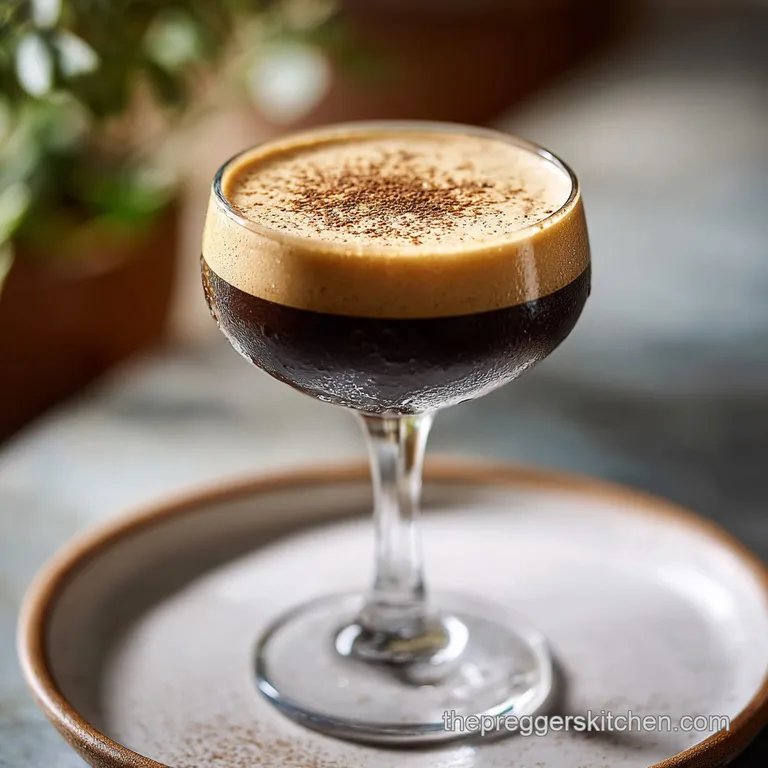
- Time: Active 5 mins, Passive 2 mins, Total 7 mins
- Flavor/Texture Hook: Velvety, bittersweet, and silky
- Perfect for: Sophisticated dinner parties or a Friday night treat
- Molecular Secrets to Achieving Velvety Coffee Foam
- Component Analysis for the Perfect Pour
- Essential Components for a Balanced Martini Mocktail
- The Critical Tools for Aerating Perfectly
- Master the Pour with These Precise Steps
- Avoiding Dilution and Maximizing Coffee Aroma
- Adjusting Ratios for Party Sized Batches
- Innovative Twists to Customize Your Spiced Coffee
- Keeping Your Syrups Fresh and Repurposing Spent Grounds
- Debunking Misconceptions About Mocktail Foam Stability
- Perfect Pairings for Your Social Coffee Toast
- Recipe FAQs
- 📝 Recipe Card
Molecular Secrets to Achieving Velvety Coffee Foam
The Crema Emulsion: Fresh espresso contains natural oils and CO2 that, when agitated, create a stable micro foam known as crema. Shaking provides the mechanical energy to trap air within these lipids, resulting in a thick, long lasting head.
Viscosity Management: The sugar in the vanilla syrup acts as a stabilizer for the air bubbles. By increasing the liquid's thickness, the sugar slows down the drainage of liquid from the bubble walls, preventing the foam from collapsing.
Thermal Shock Control: Using hot espresso against cold ice creates a rapid temperature drop that helps thicken the natural fats in the coffee. This "shiver" effect is what builds the structural integrity of the drink's body.
| Preparation Method | Total Time | Foam Density | Best For |
|---|---|---|---|
| Standard Shaker | 7 mins | High/Velvety | Classic restaurant finish |
| Electric Frother | 4 mins | Medium/Light | Quick weeknight fix |
| French Press Shake | 8 mins | Very High | Large batches for 4+ people |
Choosing the right method depends on how much effort you want to put into the "workout." I personally swear by the standard shaker because the sound is half the fun. If you're looking for something lighter to pair with this, you might also enjoy a Virgin Mojito Mocktail recipe for a refreshing contrast. The mojito offers a zingy acidity that cleanses the palate after the rich, dark notes of the espresso.
Component Analysis for the Perfect Pour
| Ingredient | Science Role | Pro Secret |
|---|---|---|
| Fresh Espresso (2 oz) | Provides oils/proteins | Use it while still warm for the best foam structure. |
| Vanilla Syrup (0.5 oz) | Stabilizes air bubbles | Don't use honey; it's too heavy and kills the froth. |
| Coffee Spirit (1 oz) | Adds "bite" and depth | Choose a spirit with a toasted sugar profile for realism. |
Essential Components for a Balanced Martini Mocktail
To get this right, you need high-quality ingredients. Don't reach for the instant coffee here; it lacks the oils we need for that iconic foam.
- 2 oz freshly brewed espresso: This is the heart of the drink. Why this? The high pressure extraction provides the lipids necessary for the thick, velvety head.
- Substitute: 2 oz very strong cold brew concentrate (though you'll lose some foam).
- 1 oz non alcoholic coffee spirit: This provides the complex, roasted flavor without the booze. Why this? It adds the fermented depth usually provided by coffee liqueur.
- Substitute: 1 oz extra strong chilled decaf coffee with a drop of rum extract.
- 0.5 oz vanilla simple syrup: Adds sweetness and that essential viscosity. Why this? Vanilla rounds out the bitterness of the coffee beans beautifully.
- Substitute: Maple syrup (adds a woody note but works in a pinch).
- 1 pinch fine sea salt: This is my "secret weapon." Why this? Salt suppresses bitterness and makes the chocolatey notes of the coffee pop.
- Substitute: A tiny drop of saline solution.
- 2 dashes non alcoholic aromatic bitters: For spice and complexity. Why this? It bridges the gap between the sweet syrup and the bitter espresso.
- Substitute: A tiny pinch of ground cinnamon or allspice.
- 3 whole espresso beans: For the traditional garnish. Why this? Represents health, wealth, and happiness and looks incredibly polished.
- Substitute: A dusting of high-quality cocoa powder.
The Critical Tools for Aerating Perfectly
You don't need a professional bar setup, but a few specific items make a massive difference. I've tried shaking this in a protein shaker bottle before, and while it works, the seal isn't always great with the heat of the espresso.
- Boston Shaker: Two tins are better than a single "cobbler" shaker because they allow for more air movement and a larger "throw" of the liquid.
- Hawthorne Strainer: Essential for keeping the ice shards out while letting the thick foam slide through into the glass.
- Fine Mesh Strainer: Use this in tandem with the Hawthorne (the "double strain") for a crystal clear liquid under the foam.
- Jigger: Accuracy is everything here. A 0.25 oz mistake can make this too sweet or too bitter.
- Chilled Coupe Glass: Put your glass in the freezer 10 mins before you start. A warm glass is the enemy of a stable foam.
Master the Pour with These Precise Steps
- Chill your glass. Place your martini or coupe glass in the freezer. Note: This prevents the drink from warming up and the foam from thinning out too quickly.
- Brew the espresso. Pull 2 oz of fresh espresso. Use it immediately while it's still "active" and warm.
- Combine the liquids. Pour the 2 oz espresso, 1 oz non alcoholic coffee spirit, and 0.5 oz vanilla simple syrup into the small tin of your shaker.
- Season the mix. Add the 1 pinch fine sea salt and 2 dashes non alcoholic aromatic bitters. Note: Salt is the "flavor volume" knob here; don't skip it.
- Fill with ice. Pack the shaker to the brim with large, solid ice cubes. Wait 10 seconds until you see the tin start to frost.
- The Hard Shake. Seal the shaker and shake vigorously for 15 to 20 seconds. You want to hear the ice smashing against the ends of the tin.
- Check the seal. The shaker should be painfully cold to the touch. Shake until the tins are frosty and difficult to separate.
- The Double Strain. Place the Hawthorne strainer over the tin and pour the liquid through a fine mesh sieve into your chilled glass.
- Let it settle. Wait 30 seconds until the foam rises and forms a distinct, pale layer.
- Garnish gracefully. Gently place 3 whole espresso beans on the foam in a triangular pattern.
Avoiding Dilution and Maximizing Coffee Aroma
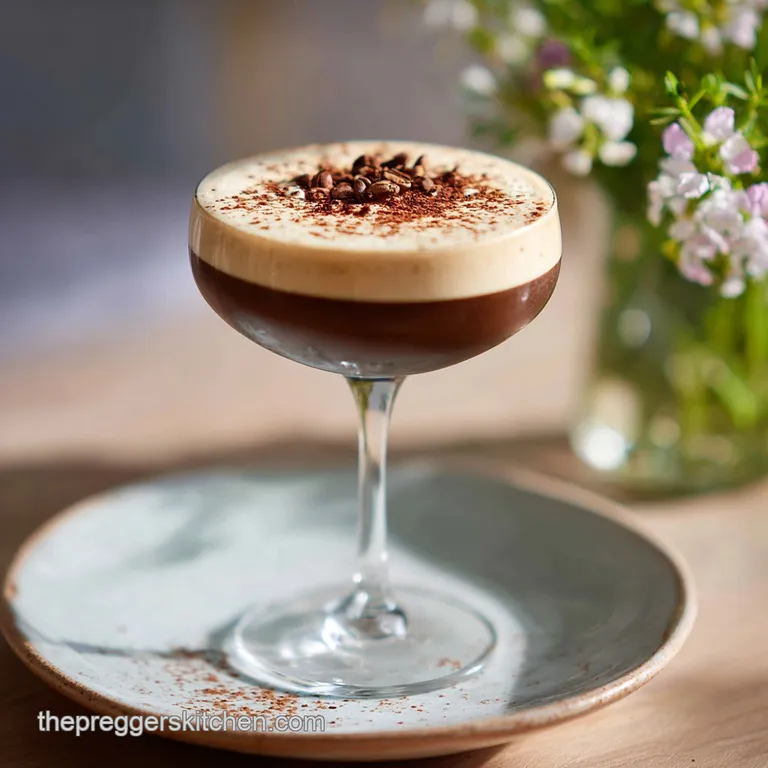
The most common mistake I see is "lazy shaking." If you don't shake hard enough, the ice doesn't break down to aerate the coffee, and you end up with a flat drink. You really have to put your shoulder into it!
Why Your Foam Is Disappearing
If your foam vanishes within minutes, your espresso was likely too old or your syrup wasn't thick enough. Freshness is the key to those natural oils. Also, make sure your shaker is bone dry before you start; any leftover water from a previous wash will dilute the proteins that hold the bubbles together.
To Avoid a Watery Drink
Don't use "gas station" ice or small chips. They melt too fast. You want big, hard cubes that chill the drink without turning into water. If you only have small ice, reduce your shaking time to 10 seconds but increase the speed significantly.
| Problem | Root Cause | Solution |
|---|---|---|
| Flat or No Foam | Old espresso or weak shake | Use beans roasted within 30 days and shake for 20 seconds. |
| Overly Bitter | Burnt espresso or no salt | Check your machine temp and always add the pinch of salt. |
| Watery Texture | Ice melted too fast | Use larger cubes and shake faster, not longer. |
Common Mistakes Checklist
- ✓ Using "Long" coffee instead of a concentrated 2 oz espresso shot (too much water).
- ✓ Forgetting to chill the glass (the heat will dissolve the micro bubbles instantly).
- ✓ Adding the ice before the liquids (this starts the dilution process too early).
- ✓ Not double straining (tiny ice shards will poke holes in your beautiful foam).
- ✓ Using sugar-free syrup without checking the viscosity (some are too thin to foam).
Adjusting Ratios for Party Sized Batches
Scaling a mocktail that relies on foam is tricky. You can't just throw everything in a blender and hope for the best.
For 2-4 Servings: You can shake two at a time in a large Boston shaker. Keep the ratios exactly the same: 4 oz espresso, 2 oz spirit, 1 oz syrup. However, you must increase your shaking time by about 5 seconds to account for the extra mass.
For Large Groups: If you're hosting a brunch, I recommend using a French Press. Put all your room temperature ingredients in the press and pump the plunger up and down rapidly for 30 seconds. This creates a massive amount of foam.
Then, pour the mix into a pitcher of ice, stir quickly to chill, and strain into glasses. It's not quite as "shattered" as a shaken version, but it's much faster than shaking 10 individual drinks.
Chef's Tip: If you are making a batch, don't add the ice until right before you serve. If the mixture sits with ice, it will dilute into a watery mess.
| Component | Standard (1) | Party (4) | Crowd (10) |
|---|---|---|---|
| Espresso | 2 oz | 8 oz | 20 oz |
| Syrup | 0.5 oz | 2 oz | 5 oz |
| Ice Type | Large Cube | Large Cube | Block Ice |
Innovative Twists to Customize Your Spiced Coffee
Once you've mastered the classic, you can start playing with the profile. If you're looking for something with a bit more holiday flair, you might want to try this Cranberry Mocktail in recipe. It's festive and provides a sharp, fruity contrast if you're serving a variety of drinks at a party.
For a Salted Caramel Twist
Swap the vanilla syrup for a salted caramel syrup. This deepens the "toasty" flavors and makes the mocktail feel more like a liquid dessert. It's particularly good if you're using a darker roast of espresso.
For a Creamy Plant Based Option
Add 0.5 oz of oat milk to the shaker. This creates a "latte" style martini. The fats in the oat milk make the foam even denser, almost like a meringue. It's a great "restaurant level" trick for guests who find straight espresso a bit too intense.
The Spiced Winter Warmth
Add a tiny pinch of cardamom and a cinnamon stick to your vanilla syrup while it's heating. The aromatics will infuse into the syrup, giving the Espresso Martini Mocktail a cozy, spiced finish that's perfect for colder months.
| Plating Level | Tweak | Effect |
|---|---|---|
| Simple | Martini Glass | Classic, clean look. |
| Polished | Cocoa Dusting | Adds aroma and hides foam imperfections. |
| Restaurant | Gold Leaf | Ultimate luxury for a celebratory toast. |
Keeping Your Syrups Fresh and Repurposing Spent Grounds
Storage: Your vanilla simple syrup will stay fresh in the fridge for up to 14 days. Store it in a glass jar with a tight lid. The mocktail itself must be enjoyed immediately; you cannot "store" a shaken drink as the foam will collapse and the ice will melt.
If you have leftover espresso, freeze it in ice cube trays to use for future drinks so you don't dilute them with water.
Zero Waste: Don't toss those espresso grounds! They make an incredible body scrub when mixed with a bit of coconut oil, or you can dry them out and use them as a deodorizer in your fridge.
Also, if you have leftover coffee spirit, it’s amazing drizzled over vanilla bean ice cream for a quick dessert.
Debunking Misconceptions About Mocktail Foam Stability
A common myth is that you need egg whites or aquafaba (chickpea water) to get a thick foam on an Espresso Martini Mocktail. While those ingredients definitely create foam, they change the flavor profile and texture, making it more "fluffy" than "velvety." If your espresso is fresh and your shake is hard enough, the natural oils are more than enough to create that iconic three layer look.
Another myth is that you should use cold espresso. Actually, "shocking" warm espresso with ice creates a better emulsion. The heat helps the sugar and oils meld before the ice locks them into a frothy structure. Trust the process and use that fresh brew!
Perfect Pairings for Your Social Coffee Toast
This drink is bold and rich, so it needs food that can stand up to those intense flavors. I love serving this alongside a dark chocolate tart or even something savory like a sharp blue cheese. The bitterness of the coffee cuts right through the fat.
If you're doing a full drink spread, consider adding a Decaf Chai Latte recipe to your menu. It provides a warm, milky alternative for guests who want the spice but maybe not the intense "kick" of the espresso. For a summer party, the Sparkling Watermelon Mocktail recipe is the ultimate refresher to serve before moving into the heavier coffee drinks after dinner.
This Espresso Martini Mocktail is more than just a drink; it's a statement. It proves that you don't need alcohol to have a sophisticated, complex, and beautiful beverage in your hand. So grab your shaker, pull a fresh shot, and let's make some foam!
Recipe FAQs
Is it true that older, cold espresso yields better foam for this mocktail?
No, fresh, warm espresso is required. The natural oils and CO2 present in a freshly pulled, warm shot provide the necessary lipids to create the stable micro foam when mechanically agitated.
How to achieve the velvety texture without using egg whites or aquafaba?
Shake vigorously for a full 20 seconds with large ice cubes. The mechanical energy traps air within the espresso's natural oils, while the sugar in the syrup stabilizes these air bubbles, creating the necessary viscosity.
Why is adding a pinch of fine sea salt crucial to the flavor profile?
Yes, the salt is critical for balance. Salt acts as a flavor enhancer by suppressing the bitter notes inherent in the coffee, allowing the deeper, roasted chocolate undertones to become more pronounced.
How to prevent the mocktail foam from collapsing quickly after pouring?
Ensure your coupe glass is deeply chilled and double strain the mixture. A warm glass immediately dissolves the delicate bubble structure; double straining removes small ice shards that would otherwise pop the foam from underneath.
Can I substitute the vanilla simple syrup with plain granulated sugar?
No, you must use a liquid sweetener like syrup. Granulated sugar will not dissolve completely in the cold liquid quickly enough, leaving a gritty texture and failing to provide the necessary viscosity to stabilize the foam.
What is the fastest preparation method if time is severely limited?
Use an electric frother for about 4 minutes. While this yields a lighter foam density compared to the standard shake, it rapidly incorporates air into the liquid base, offering a quick substitute for the intense physical shaking required.
How far in advance can vanilla simple syrup be prepared and stored?
Store the syrup in an airtight jar in the refrigerator for up to 14 days. Since the syrup acts as the primary stabilizer for the drink's texture, ensure it is fully chilled before adding it to the shaker for the best results.
Espresso Martini Mocktail Recipe
Ingredients:
Instructions:
Nutrition Facts:
| Calories | 58 calories |
|---|---|
| Protein | 0.2 g |
| Fat | 0.1 g |
| Carbs | 14.5 g |
| Fiber | 0 g |
| Sugar | 14.2 g |
| Sodium | 210 mg |
