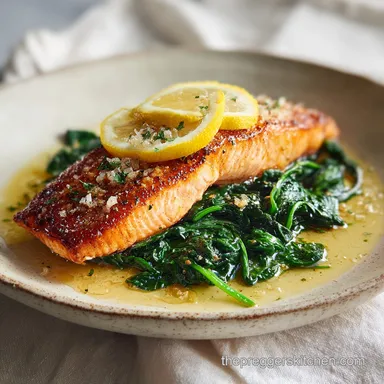
Pan-Seared Salmon and Spinach

- Time: 10 min active + 15 min cooking, including a 3 min rest
- Flavor & Texture: Flaky, tender fish paired with buttery, garlic-scented greens
- Perfect for: A nutrient-dense weeknight dinner
Salmon and Spinach
A shimmering pan of avocado oil and the sound of skin hitting the heat is where this dish starts. Getting that dark golden crust is the part that makes the whole meal feel special.
We're focusing on a technique that prevents the fish from sticking and keeps the spinach a bright, emerald green. This isn't about complex steps, but about timing and temperature.
The result is a balanced plate that supports maternal wellness. You get the omega-3s from the fish and a heavy dose of vitamins from the greens, making it a wholesome choice for anyone needing a bit more energy.
The Essentials
Before we get to the list, let's look at how the main components drive the result.
| Component | Purpose | Substitute Notes |
|---|---|---|
| Avocado Oil | High-heat searing | Grapeseed oil works similarly; avoid butter for the initial sear |
| Salmon Fillets | Primary protein | Trout is a close approximation, but adjust time for thickness |
| Baby Spinach | Iron and folate | Swiss chard is a good swap, but it takes longer to wilt |
| Lemon Juice | Brightness | Lime juice works, though the flavor is more tropical |
Here is what you need to gather.
- 4 (6 oz / 170 g) salmon fillets, skin-on Why this? Skin protects the flesh and gets crispier
- 2 tbsp (30 ml) avocado oil
- 1 tsp kosher salt
- ½ tsp (2 g) black pepper
- 10 oz fresh baby spinach Why this? Wilts quickly and retains nutrients
- 2 tbsp (30 g) unsalted butter
- 3 cloves garlic, minced
- 1 tbsp fresh lemon juice
- ¼ tsp salt
| Original Ingredient | Substitute | Why It Works |
|---|---|---|
| Unsalted Butter | Olive Oil | Similar fat content. Note: Lacks the creamy richness of butter |
| Avocado Oil | Light Olive Oil | High smoke point. Note: Ensure it is "light" to avoid smoking too early |
Necessary Gear
You don't need a lot of equipment here. A 12-inch skillet is the most important tool because it gives the fillets room to breathe. If the pan is too crowded, the fish will steam instead of sear. You'll also need a meat thermometer to ensure the fish is safe without overcooking it.
Cooking Steps
The Prep
Pat the salmon fillets bone-dry on all sides using paper towels. Note: Moisture on the skin creates steam, which prevents the crust from forming. Season both sides of the fillets with 1 tsp kosher salt and ½ tsp black pepper.

Achieving the Sear
Place a 12-inch skillet over medium-high heat and add 2 tbsp avocado oil. Heat until the oil shimmers and just begins to smoke.
Place salmon skin-side down in the pan. Press lightly with a spatula for 10 seconds to ensure full skin contact. Cook undisturbed for 4–6 minutes until a golden-brown crust forms and the fish releases naturally.
Flip the fillets and cook for another 3–4 minutes until the internal temperature reaches 145°F (63°C). For the most accurate safety check, use a USDA food safety guide for fish. Transfer the salmon to a plate and let rest uncovered for 3 minutes.

Sautéing the Greens
In the same skillet over medium heat, melt 2 tbsp unsalted butter. Add 3 cloves minced garlic and sauté for 30–60 seconds until it smells fragrant.
Add 10 oz baby spinach in handfuls, stirring constantly for approximately 2 minutes until just wilted and emerald green. Remove the pan from the heat, stir in 1 tbsp fresh lemon juice and ¼ tsp salt.

Common Problems
When the salmon sticks, it usually means the pan wasn't hot enough or the fillets were still damp. If you try to flip the fish too early, the skin will tear. Just wait for the fish to release itself.
Watery spinach happens when the heat is too low or the greens are piled too high. This causes them to stew in their own liquid rather than sauté.
Overcooked salmon loses its tenderness and becomes chalky. A thermometer is the most reliable way to stop the process at 145°F.
| Problem | Root Cause | Solution |
|---|---|---|
| Sticking skin | Pan too cool or fish damp | Heat oil until shimmering; pat fillets bone-dry |
| Gray spinach | Overcooked or acid added too early | Sauté for 2 mins max; add lemon after removing from heat |
| Dry fillets | Cooked past 145°F | Pull fish from pan as soon as temp is hit |
Swaps and Tweaks
If you want a creamier finish for this salmon and spinach dish, stir in a tablespoon of heavy cream or cream cheese right after the spinach wilts. For a dairy-free version, use a vegan butter alternative and a splash of coconut milk.
I like adding a pinch of red pepper flakes with the garlic to give the greens a subtle heat. If you have cherry tomatoes on hand, toss them in for 2 minutes before adding the spinach for a burst of acidity.
Storage Guide
Place the cooled salmon and spinach in separate airtight containers. This salmon and spinach recipe stays fresh in the fridge for 3 to 4 days, per USDA guidelines.
To reheat, avoid the microwave. It often overcooks the fish and makes the spinach rubbery. Instead, warm the salmon in a skillet over low heat with a teaspoon of water or butter, covered with a lid, for 2–3 minutes until it reaches 165°F (74°C).
Serving Suggestions

This meal is great on its own for a low-carb dinner. If you need more calories, serve it over a bed of quinoa or brown rice to soak up the garlic butter.
For a fresh contrast, I like a side of crisp greens with a Greek Yogurt Dressing recipe. The tanginess of the yogurt cuts through the richness of the salmon.
Why It Works
The high heat creates a savory crust through browning, while the short cook time for the greens preserves the iron and folate. Adding the lemon juice after the heat is off keeps the spinach from turning a dull brown.
Searing the fish does not "seal in juices," but it creates the flavor. The moisture loss happens regardless, so the focus is on the crust and the internal temperature.
| Method | Time | Texture | Best For |
|---|---|---|---|
| Stovetop | 15 min | Crispy skin, velvety greens | Maximum flavor and speed |
| Oven | 20 min | Tender skin, soft greens | Hands-off cooking |
Questions Readers Ask
What vegetables can you eat with salmon?
Fresh baby spinach is the primary pairing here. You can also complement the dish with a side of homemade hollandaise for added richness.
Should you salt and pepper salmon?
Yes, season both sides. This draws out surface moisture for a better sear and ensures the fish is flavored throughout.
Why did the dish turn out too salty, and does the type of salt matter?
Over-seasoning or using fine salt instead of kosher salt is usually the cause. Kosher salt has larger grains, making it easier to control the amount applied to the fillets.
Can fresh spinach be used instead of frozen?
Yes, fresh baby spinach is recommended. It wilts quickly in butter and maintains a better texture and bright emerald color than frozen options.
Does the type of salmon change the cooking?
Yes, fat content affects the timing. Wild salmon is leaner and cooks faster, while king or farmed salmon may need a few extra minutes to reach 145°F.
Could the spinach mixture be prepared ahead and refrigerated?
No, sauté it fresh. Spinach releases water as it cooks, so preparing it ahead results in a soggy texture when reheated.
Is it possible to make this a creamy salmon dish?
Yes, through a different method. This version relies on butter and lemon for flavor, while creamy versions use different thickeners for a richer consistency.
How to store the leftovers?
Place the cooled salmon and spinach in separate airtight containers. Keep them in the fridge for 3 to 4 days.
Pan-Seared Salmon and Spinach