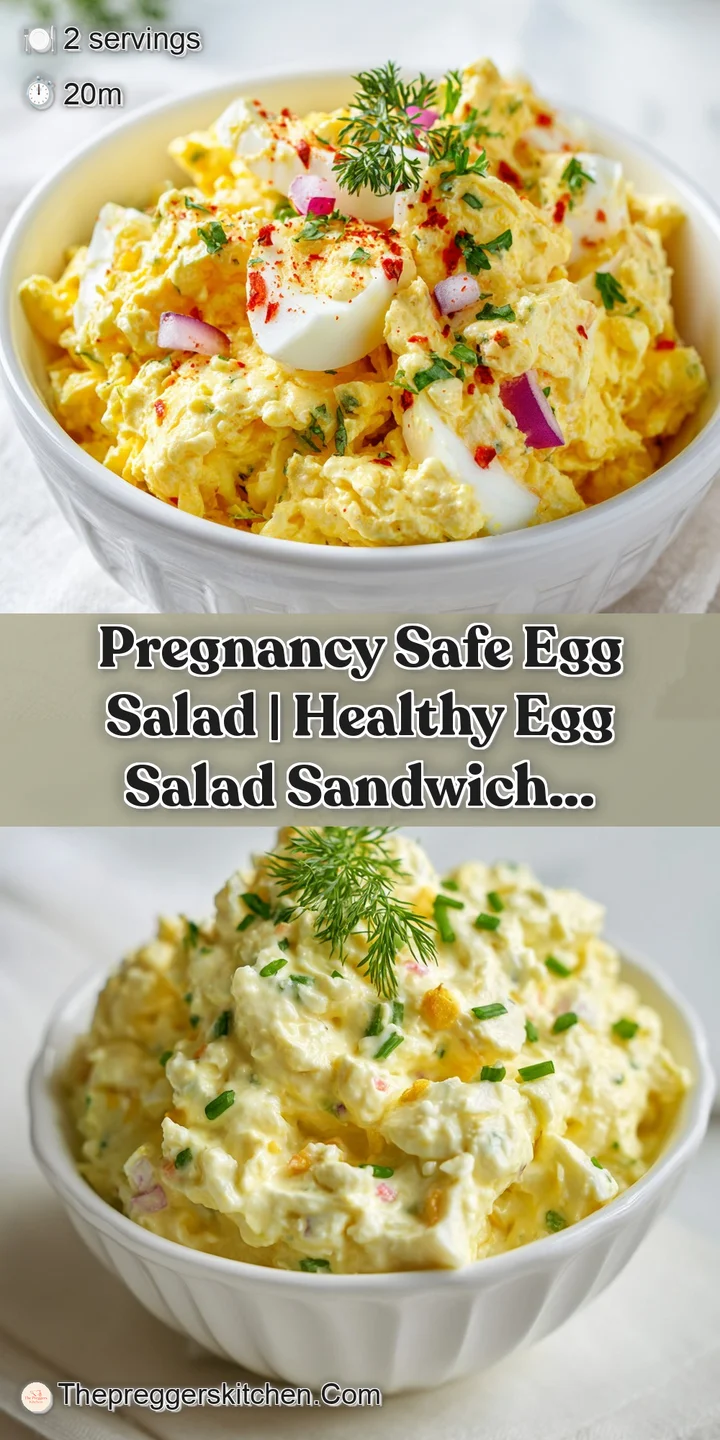
Pregnancy Safe Egg Salad: Creamy and Nutrient-Dense
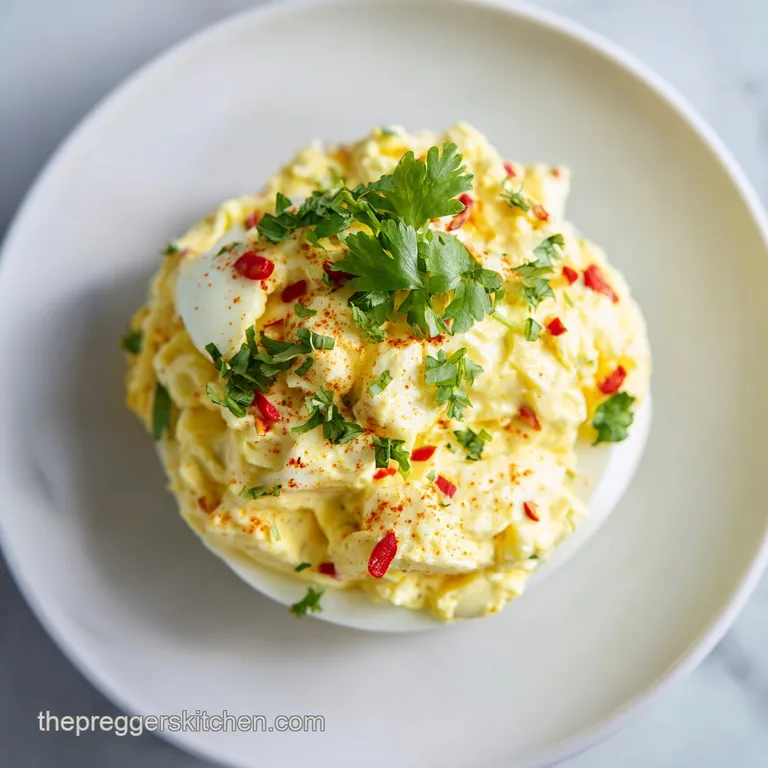
- Time: Active 10 minutes, Passive 10 minutes, Total 20 minutes
- Flavor/Texture Hook: Velvety, protein rich, and crisp
- Perfect for: High protein pregnancy lunches and meal prep
- Why This Recipe Supports Vitality
- Essential Timing and Precision Metrics
- Nutrient Dense Components for Health
- Simple Tools for Better Results
- Mastering the Safe Hard Boil
- Troubleshooting Texture and Safety Concerns
- Wholesome Additions for Flavor Variety
- Debunking Common Kitchen Myths
- Safe Storage and Meal Prep
- Complete Meals for Sustained Energy
- Recipe FAQs
- 📝 Recipe Card
Saturday mornings changed the moment that second line appeared on the test. Suddenly, the simple act of opening the fridge felt like navigating a nutritional minefield. I remember standing in my kitchen, staring at a carton of eggs, wondering if I could ever enjoy a creamy sandwich again without worrying about salmonella or listeria risks.
The craving for a classic egg salad was overwhelming, but the typical deli versions sitting in lukewarm cases with questionable mayo were officially off the menu.
That was the day I decided to treat my kitchen like a sanctuary of precision. I wanted a meal that felt like a hug but functioned like a supplement. Most people think "safe" means "overcooked and rubbery," but that's a misunderstanding of protein denaturation.
By using a controlled residual heat method, we can hit that critical safety window while keeping the yolks creamy and the whites tender. This isn't just about avoiding risk; it's about fueling your body with the folate and choline it needs during this specific season of life.
We've all been there, pushing a rubbery, sulfur smelling egg around a plate. It’s unappealing and, frankly, unnecessary. This pregnancy safe egg salad relies on the physics of water temperature and the buffering power of Greek yogurt.
We aren't just making a sandwich; we're constructing a nutrient dense vessel for your health. I’ve made this dozens of times during my own journey, and it has consistently been the one meal that stays down when morning sickness tries to win.
Why This Recipe Supports Vitality
- Thermal Carryover: Using residual heat after a rolling boil ensures the internal yolk temperature reaches 71°C (160°F) without the aggressive agitation that causes whites to become tough.
- Protein Synergy: Combining 6 large eggs with Greek yogurt provides a significant 25.2 grams of protein per serving, essential for fetal tissue growth and maternal blood volume expansion.
- Sulfur Control: Stopping the cook at exactly 10 minutes prevents the chemical reaction between iron in the yolk and hydrogen sulfide in the white, eliminating that unappealing green ring.
- Enzymatic Balance: Fresh lemon juice and Dijon mustard provide the acidity needed to brighten the fats, making the dish easier to digest when your system feels sluggish.
| Method | Cook Time | Texture | Safety Profile |
|---|---|---|---|
| Stovetop (This Recipe) | 10 mins (off heat) | Velvety and tender | 160°F internal (FDA compliant) |
| Oven (Muffin Tin) | 30 mins (325°F) | Denser, slightly toasted | High, but higher risk of browning |
| Pressure Cooker | 5 mins (High) | Very easy to peel | High, but can be rubbery |
Choosing the right cooking method is about balancing texture with absolute safety. While the oven method is convenient for large batches, the stovetop method listed here offers the most consistent results for a small, fresh serving of pregnancy safe egg salad.
The gentle descent of water temperature is far more forgiving on delicate egg proteins than the dry, circulating heat of an oven.
Essential Timing and Precision Metrics
| Ingredient | Science Role | Pro Secret |
|---|---|---|
| Large Eggs | Structural Protein | Use Grade A eggs for the strongest membrane and cleanest flavor. |
| Greek Yogurt | Emulsifier & Probiotic | Choose plain, full fat versions to aid in the absorption of fat soluble vitamins. |
| White Vinegar | Shell Permeability | Vinegar slightly dissolves the calcium carbonate, making the eggs much easier to peel. |
When we look at the components of a safe egg salad, the eggs themselves are the star performers. They are essentially a gold mine of choline, which is vital for the development of the fetal brain and spinal cord.
Most prenatal vitamins don't actually contain enough choline, so getting it through whole food sources like this is a massive win for your daily intake goals.
The Greek yogurt isn't just a healthy swap for the sake of being healthy. It’s a functional choice. Mayonnaise is a stable emulsion of oil and egg yolks, but it lacks the micronutrient density we’re after.
The yogurt provides calcium and a tang that cuts through the richness of the yolks, while the Dijon mustard acts as a bridge, helping the fats and liquids stay perfectly bound together.
Nutrient Dense Components for Health
To get started, you will need the following ingredients. Please stick to these measurements to ensure the dressing to egg ratio remains balanced and doesn't become watery.
- 6 Large Grade A Eggs: The foundation of the dish. Why this? Provides high-quality protein and essential choline. (Substitute: Medium eggs, but use 7-8).
- 1 tbsp White Vinegar: Added to the boiling water. Why this? Simplifies the peeling process later. (Substitute: Apple cider vinegar).
- 1/2 cup Plain Greek Yogurt: The creamy base. Why this? Boosts protein and adds healthy probiotics. (Substitute: Avocado mash for dairy-free).
- 1 tsp Dijon Mustard: For a sharp, sophisticated bite. Why this? Emulsifies the dressing. (Substitute: Yellow mustard).
- 1 tsp Fresh Lemon Juice: The necessary brightener. Why this? Assists in iron absorption. (Substitute: Lime juice).
- 1/4 tsp Smoked Paprika: Adds depth without heat. Why this? Provides a subtle smoky undertone. (Substitute: Sweet paprika).
- 2 stalks Celery: Finely diced for texture. Why this? Adds a necessary crunch and hydration. (Substitute: Diced cucumber, seeds removed).
- 2 tbsp Fresh Chives: Minced fine. Why this? Offers mild onion flavor without the bite. (Substitute: Green onion tops).
- 1/8 tsp Salt: To taste. Why this? Enhances all other flavors. (Substitute: Celery salt).
- 1/8 tsp Black Pepper: For a hint of spice. Why this? Adds visual contrast and warmth. (Substitute: White pepper).
If you find yourself craving a bit more variety in your diet, you might also enjoy a pregnancy superfood salad bowl which complements this egg salad beautifully as a side dish or a base for a larger meal.
Simple Tools for Better Results
You don't need a professional kitchen to make a safe egg salad, but a few specific tools will make your life much easier and the results more consistent.
- Medium Saucepan: Needs to be large enough to hold 6 eggs in a single layer. Overcrowding leads to uneven cooking.
- Timer: This is non negotiable. Precision is the difference between a velvety yolk and a chalky one.
- Slotted Spoon: For safe transfer from boiling water to the ice bath.
- Large Mixing Bowl: For the ice bath.
- Small Whisk: To ensure the yogurt dressing is completely smooth before adding the eggs.
- Chef’s Knife: Sharp enough to dice the celery into tiny, uniform cubes.
Chef’s Tip: If you have a steamer basket, try steaming the eggs for 12 minutes instead of boiling. Many find that steamed eggs are even easier to peel because the high intensity heat shocks the membrane away from the shell instantly.
Mastering the Safe Hard Boil
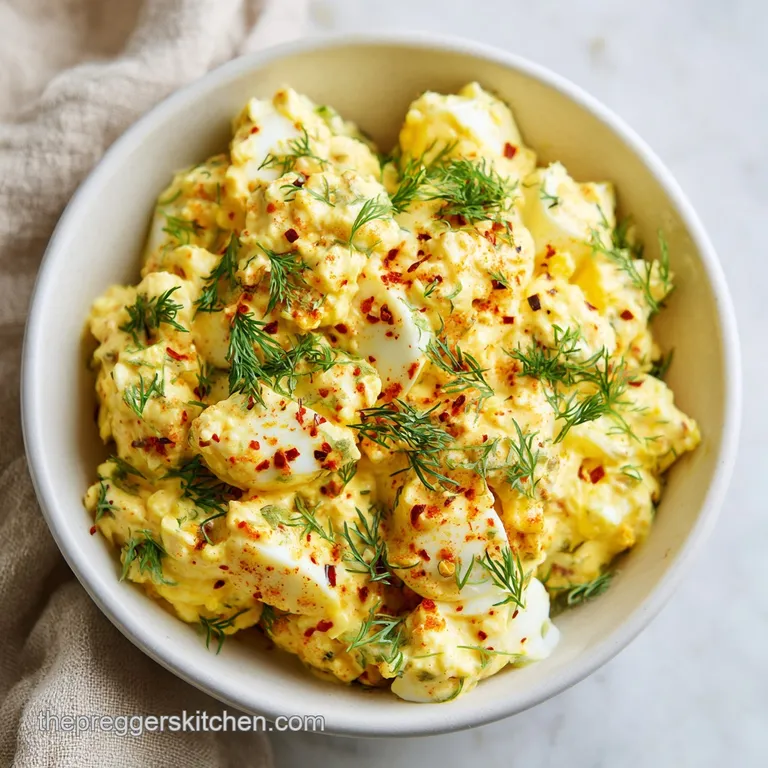
- Prep the pan. Place 6 large eggs in a single layer in a saucepan and cover with cold water by at least 2.5 cm (one inch). Note: Starting with cold water prevents the shells from cracking due to temperature shock.
- Add vinegar. Pour in 1 tablespoon of white vinegar. Note: This helps keep the egg white inside the shell if a minor crack does occur.
- Boil the water. Bring the water to a rolling boil over high heat until the surface is agitated with large bubbles.
- Set the timer. Once boiling, immediately turn off the heat, cover the pan with a tight fitting lid, and let the eggs sit for exactly 10 minutes. Note: This ensures they reach the 160°F internal safety threshold through gentle residual heat.
- Shock the eggs. Use a slotted spoon to transfer the eggs to a prepared ice bath for 5 minutes until the shells feel cold to the touch.
- Peel and dice. Gently crack the shells and peel under cool running water. Dice the eggs into bite sized 1 cm pieces.
- Whisk the base. In a separate mixing bowl, combine 1/2 cup Greek yogurt, 1 tsp Dijon, 1 tsp lemon juice, and 1/4 tsp smoked paprika until the mixture is silky and uniform.
- Combine the salad. Gently fold in the diced eggs, 2 stalks of diced celery, and 2 tbsp of chives.
- Season and serve. Add 1/8 tsp salt and 1/8 tsp black pepper. Taste and adjust if necessary, then serve immediately or chill.
Troubleshooting Texture and Safety Concerns
Why Your Eggs Are Rubbery
If the egg whites feel like pencil erasers, they have likely been boiled too vigorously for too long. High heat causes the protein strands to bond too tightly, squeezing out moisture. By using the "off heat" method in this pregnancy safe egg salad, we avoid this.
If it’s already happened, chop the eggs finer so the texture is less noticeable.
Why the Dressing Is Watery
Watery egg salad usually comes from two things: not drying the eggs properly after the ice bath, or the celery releasing moisture. Make sure to pat your peeled eggs bone dry with a paper towel. Also, ensure your Greek yogurt is a thick "Greek" variety, not regular thin yogurt.
| Problem | Root Cause | Solution |
|---|---|---|
| Greenish Yolk Edge | Overcooking / High heat | Reduce sitting time to exactly 10 mins; use an ice bath immediately. |
| Difficult Peeling | Extremely fresh eggs | Use eggs that are 7-10 days old; add vinegar to the water. |
| Bland Flavor | Lack of acidity | Add an extra 1/2 tsp of lemon juice or a pinch more salt. |
Common Mistakes Checklist:
- ✓ Never start with eggs in already boiling water; this leads to uneven cooking.
- ✓ Don't skip the ice bath; carryover heat will overcook the eggs even after you take them out of the water.
- ✓ Avoid using "low-fat" yogurt as it contains more thickeners and less structural fat.
- ✓ Don't mash the eggs too hard; you want distinct chunks, not a paste.
- ✓ Ensure you use a lid that fits tightly to trap the steam during the 10 minute rest.
If you are looking for other creamy options that are safe for your pregnancy, you might find my pregnancy safe Caesar dressing to be a fantastic alternative for your weekday salads.
Wholesome Additions for Flavor Variety
If you want a different flavor profile while keeping the core nutrition intact, try these variations:
- If you want more healthy fats, do this: Replace half of the Greek yogurt with mashed ripe avocado. It adds a beautiful green hue and a boost of monounsaturated fats.
- If you want an anti inflammatory kick, do this: Add 1/4 tsp of ground turmeric and a pinch more black pepper. The piperine in the pepper helps your body absorb the curcumin in the turmeric.
- If you want a savory, umami boost, do this: Stir in 1 tsp of nutritional yeast. It provides a cheesy flavor and an extra dose of B vitamins.
- To double the recipe
- Use 12 eggs but only increase the salt and spices to 1.5x the original amount. Use a larger pot to ensure all eggs remain in a single layer.
- To cut the recipe in half
- Boil 3 eggs as usual (the timing remains the same). Use 1/4 cup of yogurt and a "heavy pinch" of the seasonings.
- For meal prep
- Boil a dozen eggs at the start of the week and store them in their shells. Only mix the salad 24 hours before you plan to eat it to keep the celery crisp.
Debunking Common Kitchen Myths
Myth: Egg yolks are bad for your heart during pregnancy. Truth: While yolks contain cholesterol, they are also the primary source of choline and lutein. For most people, the dietary cholesterol in eggs has a minimal impact on blood cholesterol levels compared to saturated and trans fats.
During pregnancy, the nutrient density of the yolk is incredibly valuable for the baby's development.
Myth: You must boil eggs for 15 minutes to be "safe." Truth: Safety is about internal temperature, not just time. The FDA recommends an internal temperature of 160°F. Our 10 minute residual heat method easily reaches this mark while preserving a superior texture.
Overboiling to 15 or 20 minutes simply ruins the culinary experience without adding extra safety benefits.
Safe Storage and Meal Prep
Storage Guidelines: This pregnancy safe egg salad should be stored in an airtight glass container in the refrigerator. It is best consumed within 2 days. Because we are using Greek yogurt instead of shelf stable mayo, it is even more sensitive to temperature.
Never leave it out on the counter for more than 30 minutes.
Freezing: Do not freeze egg salad. Cooked egg whites become tough, watery, and rubbery when frozen and thawed. The yogurt dressing will also break and separate, leaving you with an unappealing texture.
Zero Waste Tip: Don't throw away those eggshells! Crush them into fine pieces and add them to your garden soil or compost. They are an excellent source of calcium for your plants, especially tomatoes.
You can also save the celery leaves; mince them up and toss them into the salad along with the chives for an extra burst of herbal flavor.
Complete Meals for Sustained Energy
When serving your egg salad, consider the vessel. A sprouted grain bread or a sourdough provides complex carbohydrates that prevent blood sugar spikes. If you are watching your carb intake, large romaine lettuce boats or hollowed out bell peppers make for a refreshing, crunchy alternative.
Pair this dish with a side of fresh berries or a small handful of walnuts to round out the meal with antioxidants and omega-3 fatty acids. This combination ensures you stay full longer and provides a steady stream of energy for both you and your growing baby.
Remember, the goal of a pregnancy safe egg salad is to make nutrition feel easy, safe, and genuinely enjoyable.
You've got this one nutrient dense bite at a time. Whether it's a quick lunch between appointments or a quiet moment in the afternoon, this recipe is a reliable staple that respects both your taste buds and your peace of mind.
Recipe FAQs
Can a pregnant woman eat egg salad?
Yes, as long as the eggs are cooked to the proper temperature. The key is ensuring the yolks and whites are firm, which occurs when they reach the FDA-recommended internal temperature of 160°F during the 10-minute resting period.
What is a healthy alternative to egg mayonnaise?
Use plain Greek yogurt as a creamy, protein packed swap. It provides a similar tangy profile and luxurious texture without the high fat content found in traditional mayonnaise based dressings.
Can I have mayonnaise while pregnant?
Yes, store-bought mayonnaise is generally safe because it is made with pasteurized eggs. However, if you prefer to avoid processed additives, our Greek yogurt substitution offers a fresh and nutrient dense alternative.
What are 5 foods to avoid while pregnant?
Avoid raw or undercooked eggs, unpasteurized dairy, raw sprouts, deli meats, and high mercury fish. These items pose significant risks for foodborne illness, which is why we strictly follow the 10-minute resting time to ensure eggs are fully cooked.
How to ensure egg yolks are fully cooked?
Boil the water, remove from heat, cover, and let the eggs sit for exactly 10 minutes. This specific timing guarantees the eggs hit the 160°F mark necessary for safety.
Is it true I can use lukewarm water to start boiling my eggs?
No, this is a common misconception. Always start with cold water covering the eggs by at least an inch to ensure even heating and prevent the shells from cracking during the process.
How to achieve the perfect creamy consistency for the dressing?
Whisk the Greek yogurt, mustard, lemon juice, and paprika vigorously until completely smooth before adding the eggs. If you enjoyed mastering this stable nutrient dense emulsion, see how the same whisking principle creates a perfect texture in our iron rich smoothie.
Pregnancy Safe Egg Salad 2

Ingredients:
Instructions:
Nutrition Facts:
| Calories | 265 kcal |
|---|---|
| Protein | 25.2 g |
| Fat | 15.6 g |
| Carbs | 4.3 g |
| Fiber | 0.7 g |
| Sugar | 2.4 g |
| Sodium | 448 mg |
