Salmon and Spinach: Pan-Seared and Nutrient-Dense
- Time: Active 5 minutes, Passive 10 minutes, Total 15 minutes
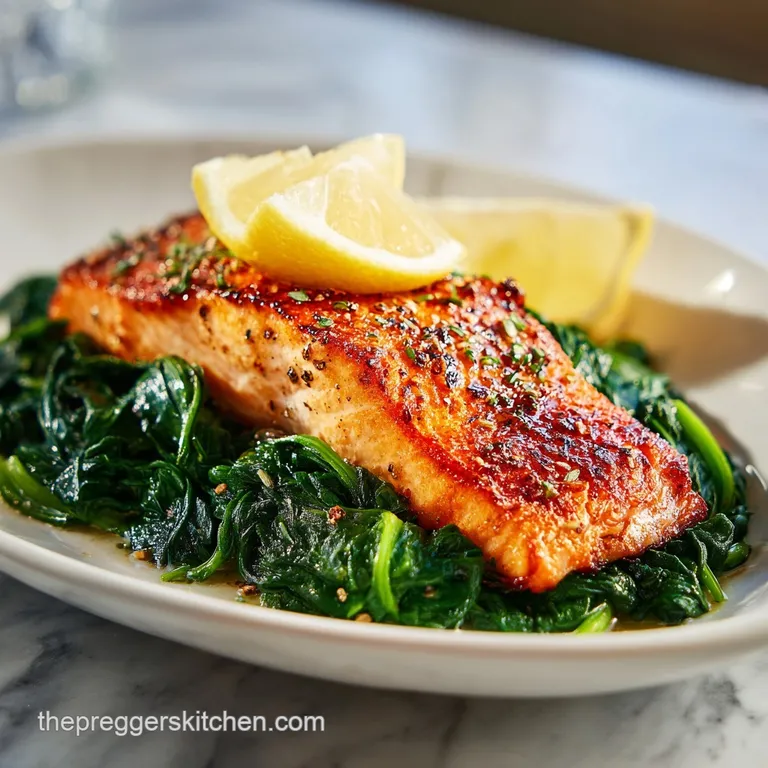
- Flavor/Texture Hook: Silky, pan seared salmon paired with tender, lemon brightened greens
- Perfect for: Weeknight prenatal nourishment, second trimester energy boosts, and beginner friendly meal prep
- Mastering Your Pregnancy Recipe with Salmon and Spinach
- Optimizing Heat for Nutrient Retention
- Selecting High Quality Nutrient Dense Components
- Essential Tools for Precise Cooking
- Executing the Fifteen Minute Kitchen Method
- Solving Common Texture and Moisture Issues
- Reliable Substitutions for Dietary Variety
- Storage Logistics and Minimizing Kitchen Waste
- Professional Presentation and Flavor Pairings
- Recipe FAQs
- 📝 Recipe Card
Mastering Your Pregnancy Recipe with Salmon and Spinach
The rhythmic sizzle of a cold salmon fillet hitting a hot, oiled skillet is one of those sounds that immediately signals a good meal is coming. I remember standing in my kitchen during my second trimester, dealing with that specific kind of "hunger tired" where you need something nutrient dense but you only have the energy for a 15 minute turnaround.
I’d tried making this dish by tossing everything in at once, which resulted in a sad, gray fish and a pool of watery greens. That mistake taught me the importance of the two zone pan method, where we respect the different needs of the protein and the produce.
Salmon is the undisputed hero here, and for good reason. When we talk about pregnancy safe proteins, salmon sits at the top because of its high DHA content, which is vital for your baby's brain development.
I chose skinless fillets for this specific method because it allows the lemon and garlic to penetrate the flesh more deeply during the quick steam phase. Using a substitute like tilapia or cod won't give you that same velvety fat profile that makes salmon so forgiving if you accidentally leave it on the heat for an extra thirty seconds.
This approach isn't just about getting dinner on the table; it’s about optimizing every bite for bioavailability. We aren't just eating spinach; we are pairing it with lemon juice to ensure the Vitamin C helps your body actually use the non heme iron found in those greens.
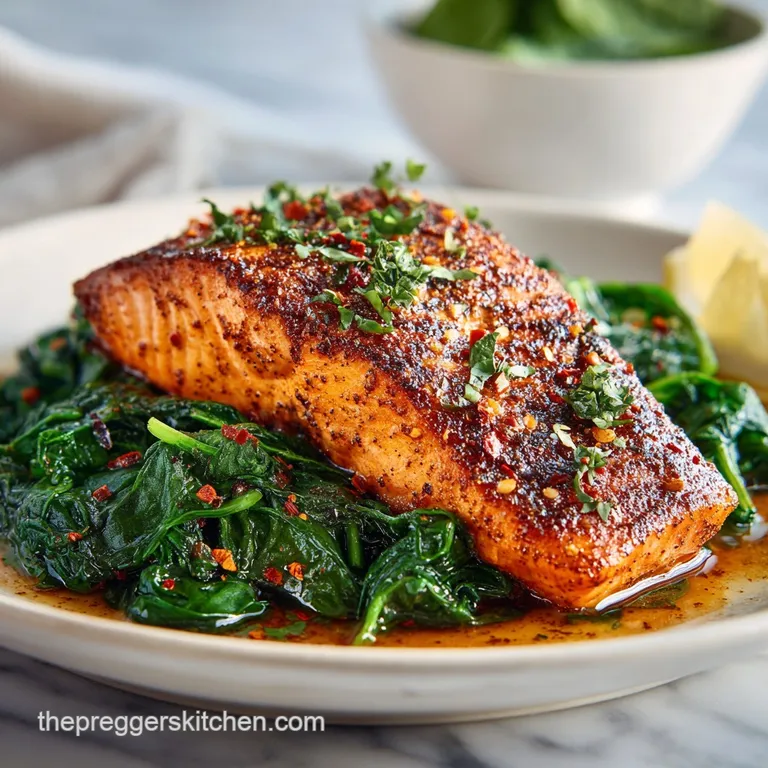
It's a small scientific win that makes a huge difference in your energy levels throughout the day. Trust me, once you see how that mahogany crust forms on the fish while the spinach stays a brilliant, bright green, you'll never go back to those "all in-one" bakes that turn everything to mush.
Optimizing Heat for Nutrient Retention
Precision cooking is the secret to keeping your meals wholesome and high in quality. When we understand how heat interacts with omega-3 fatty acids and delicate folate, we can adjust our timing to prevent degradation.
- Thermal Momentum: By searing the salmon over medium high heat first, we create a structural crust that holds the internal moisture, allowing the center to cook via gentle, indirect heat once the pan is covered.
- Ascorbic Acid Catalyst: Adding the lemon juice directly to the spinach during the wilting phase does more than add tang; the Vitamin C significantly increases the absorption of the iron present in the greens.
- Controlled Steam Environment: Covering the pan for exactly 60 seconds creates a pressurized pocket of steam that softens the spinach cell walls without leaching out the water soluble vitamins into the pan.
- Lipid Stability: Using extra virgin olive oil at a medium high threshold ensures we stay below the smoke point while still providing the necessary conductive medium for a crisp exterior.
| Thickness of Fillet | Target Internal Temp | Rest Time | Visual Finish Cue |
|---|---|---|---|
| 0.75 inch | 145°F (63°C) | 2 minutes | Flakes easily with a fork |
| 1.0 inch | 145°F (63°C) | 3 minutes | Center is opaque and pale pink |
| 1.5 inch | 145°F (63°C) | 4 minutes | Firm to the touch with no "wobble" |
The transition from searing to steaming is the most critical window in this process. If you leave the lid on for two minutes instead of one, the spinach will release too much moisture and the salmon will move from silky to rubbery.
We want to hit that sweet spot where the garlic is fragrant but not burnt, and the greens are just beginning to collapse into a velvety pile.
Selecting high-quality Nutrient Dense Components
Every element in this dish serves a functional purpose for prenatal health. We aren't just looking for flavor; we are looking for the highest concentration of minerals and healthy fats to support your body's changing needs.
| Component | Science Role | Pro Secret |
|---|---|---|
| Salmon Fillets | Primary source of DHA/EPA omega-3 fats | Pat them with paper towels until bone dry for the best sear. |
| Baby Spinach | Source of folate and non heme iron | Use fresh, not frozen, to avoid a watery texture in the skillet. |
| Garlic Shavings | Provides allicin for immune support | Thinly shave instead of mincing to prevent bitter, burnt bits. |
| Toasted Pine Nuts | Adds healthy fats and textural contrast | Toast them in a dry pan beforehand to release their essential oils. |
When you are sourcing your salmon, look for fillets that are firm to the touch and have a vibrant, consistent color. If you are using frozen fillets, ensure they are completely thawed in the refrigerator overnight.
Any excess ice crystals will turn into steam the moment they hit the oil, which ruins that golden brown crust we are aiming for.
Essential Tools for Precise Cooking
To get the results we want in 15 minutes, the right gear is non negotiable. You need a 12 inch skillet, preferably stainless steel or cast iron, because these materials hold heat much better than thin aluminum pans.
A heavy pan means that when you drop those cold fillets in, the temperature doesn't plummet, which is exactly how you avoid the salmon sticking to the bottom.
You also need a lid that fits snugly. If your favorite skillet doesn't have a lid, a large baking sheet can work in a pinch, but a glass lid is better so you can watch the spinach wilt without losing heat. A thin metal spatula (often called a fish spatula) is also a lifesaver here.
It’s flexible enough to slide under the delicate crust without tearing the fish apart. Finally,, an instant read thermometer is your best friend. In pregnancy, food safety is paramount, and hitting that 145°F internal temperature ensures the salmon is safe to eat while remaining juicy.
Executing the Fifteen Minute Kitchen Method
Success with this recipe depends on your setup. Have everything chopped and measured before you even turn on the stove. Since the total cooking time is only 10 minutes, you won't have time to peel garlic while the fish is searing.
- Pat the 2 skinless salmon fillets (6 oz each) extremely dry with a paper towel. Note: Surface moisture is the enemy of browning.
- Season both sides of the fillets evenly with 0.5 tsp kosher salt, 0.25 tsp cracked black pepper, and 0.5 tsp garlic powder.
- Heat 1 tsp extra virgin olive oil in a 12 inch skillet over medium high heat until the oil shimmers and barely begins to smoke.
- Place salmon in the pan and cook undisturbed for 4 minutes until a mahogany crust forms and the fish releases naturally from the pan.
- Gently flip the fillets using a flexible spatula.
- Lower the heat to medium immediately to prevent the bottom from overcooking.
- Move the salmon to one side of the pan and add the 2 cloves of thinly shaved garlic to the empty space.
- Sauté the garlic for 30 seconds until it smells nutty and turns pale golden.
- Add the 5 oz of fresh baby spinach on top of the garlic and pour 1 tbsp of fresh lemon juice over the greens.
- Cover the pan with a tight fitting lid for 60 seconds until the spinach is wilted but still bright green.
- Remove the lid and check that the salmon has reached an internal temperature of 145°F.
- Toss the wilted spinach with 1 tsp lemon zest and 1 tbsp toasted pine nuts, then serve immediately.
Solving Common Texture and Moisture Issues
One of the most frequent complaints I hear about salmon and spinach is that the dish ends up "soupy." This usually happens because the heat wasn't high enough or the spinach was added too early.
If you find a pool of green liquid at the bottom of your pan, it's a sign that the spinach steamed for too long, breaking down the cell walls completely and releasing all its internal water.
Preventing Rubbery Salmon
If your salmon feels tough or "bouncy," it has likely passed the 150°F mark. Because salmon is rich in protein and fat, it continues to cook for a few minutes after you take it out of the pan. This is called carryover cooking.
To avoid this, pull the fish off the heat the second your thermometer hits 145°F. If you don't have a thermometer, look for the "flake test" the layers of the fish should just begin to separate when pressed gently with a fork.
Managing Spinach Wateriness
Spinach is nearly 90% water. If you find your greens are too wet, next time try "dry wilting" them. This means adding the spinach to the pan without any extra liquid, relying only on the residual moisture from washing the leaves.
However, in this recipe, the lemon juice is essential for the iron absorption science, so if it's too wet, simply use a slotted spoon to serve the greens, leaving the excess liquid in the pan.
| Problem | Root Cause | Solution |
|---|---|---|
| Salmon sticks to pan | Pan or oil wasn't hot enough | Wait for the oil to shimmer before adding the fish. |
| Garlic tastes bitter | Garlic was burnt | Add the garlic only after lowering the heat to medium. |
| Spinach is gray | Cooked for too long | Limit the covered steaming phase to exactly 60 seconds. |
Common Mistakes Checklist
- ✓ Skipping the paper towel step (moist fish will steam, not sear).
- ✓ Using a pan that is too small (overcrowding lowers the temperature and causes sticking).
- ✓ Flipping the salmon too early (if it doesn't release easily, the crust hasn't formed yet).
- ✓ Leaving the lid on after the 60 second mark (this overcooks the delicate greens).
- ✓ Forgetting to zest the lemon (the oils in the zest provide more flavor than the juice alone).
Reliable Substitutions for Dietary Variety
While the combination of salmon and spinach is a nutritional powerhouse, you might want to switch things up based on what's in your fridge. If you're looking for a different texture, you can swap the spinach for kale or Swiss chard, though these heartier greens will need an extra 2 minutes of steaming time to become tender.
| Original Ingredient | Substitute | Why It Works |
|---|---|---|
| Salmon Fillets | Steelhead Trout | Very similar fat content and texture. Note: Trout fillets are often thinner, so reduce sear time by 1 minute. |
| Baby Spinach | Arugula | Adds a peppery bite. Note: Wilts much faster, so only steam for 30 seconds. |
| Toasted Pine Nuts | Slivered Almonds | Provides a similar crunch and healthy Vitamin E. |
If you find yourself wanting a more "hands off" version of this flavor profile, you might enjoy my Salmon and Spinach Bake, which uses the oven to handle the heat. It’s a great alternative if you’re feeling particularly sensitive to cooking smells, as the oven contains the aroma better than an open skillet.
Storage Logistics and Minimizing Kitchen Waste
In a pregnancy focused kitchen, we want to be very careful with leftovers. Cooked salmon is safe in the refrigerator for up to 2 days when stored in an airtight container. When reheating, avoid the microwave if possible, as it will make the fish rubbery and intensify the "fishy" smell.
Instead, place the salmon in a cold oven, turn it to 275°F, and heat for about 10-15 minutes until just warmed through.
For zero waste cooking, don't throw away those lemon peels! After zesting, you can toss the spent lemon halves into a jar of white vinegar to create a natural kitchen cleaner. Also, if you have leftover toasted pine nuts, store them in the freezer.
Because of their high oil content, they can go rancid quickly at room temperature, but they’ll stay fresh for months in the cold. If you find yourself with an extra handful of fresh spinach that's about to wilt, blend it into a smoothie or freeze it in ice cube trays with a little water for future soups.
Professional Presentation and Flavor Pairings
When serving this, I love to plate the salmon directly on top of the bed of spinach. The juices from the fish mingle with the lemon garlic greens, creating a natural sauce that doesn't require any heavy cream or butter.
To make it a more substantial meal, consider serving it alongside a complex carbohydrate to keep your blood sugar stable. A side of quinoa or wild rice works beautifully here.
If you're looking for more inspiration, this Nourishing Pregnancy Meal shows you how to integrate these same high-quality proteins into a larger meal prep strategy. For the best sensory experience, finish the dish with a tiny sprinkle of flaky sea salt right before it hits the table. That final crunch against the velvety texture of the salmon is exactly what makes a 15 minute dinner feel like a restaurant quality experience.
One last tip: if you're in your first trimester and struggling with strong smells, try chilling the salmon well before cooking and ensuring your kitchen is well ventilated. The garlic and lemon in this recipe are specifically designed to brighten the dish and mask any heavy "oiliness" that can sometimes be a trigger.
It’s all about making nutrient density work for your current reality.

Recipe FAQs
What temperature should I cook salmon to while pregnant?
Cook your salmon until it reaches an internal temperature of 145°F. This ensures the fish is fully cooked through and safe for consumption during pregnancy.
What ingredients pair well with spinach and salmon?
Use shaved garlic, fresh lemon juice, lemon zest, and toasted pine nuts. These components build a bright, savory flavor profile that complements the richness of the fish and the earthiness of the spinach.
How to cook salmon for diabetics?
Sear the salmon in one teaspoon of olive oil to keep the dish heart healthy. If you enjoyed mastering the searing technique here, see how the same principle works in our Superfood Salad Bowl for another balanced, blood sugar-friendly meal.
Is salmon good for babies in the womb?
Yes, salmon is an excellent choice during pregnancy. It provides essential nutrients that support healthy fetal development while remaining a lean protein source.
How to prevent salmon from sticking to the skillet?
Pat the fillets extremely dry with a paper towel and allow them to cook undisturbed for 4 minutes. If the salmon does not release easily when you attempt to flip, the crust has not yet formed; wait an additional few seconds.
Is it true I should overcook the spinach to ensure it is safe?
No, this is a common misconception. You only need to steam the spinach for 60 seconds with the lid on; leaving it covered longer will overcook the greens and ruin their delicate texture.
How to store leftover salmon safely?
Keep leftovers in an airtight container in the refrigerator for no more than 2 days. When ready to eat, reheat gently in a 275°F oven for 15 minutes to avoid the rubbery texture often caused by microwaves.
Salmon And Spinach 5
Ingredients:
Instructions:
Nutrition Facts:
| Calories | 312 kcal |
|---|---|
| Protein | 37.5 g |
| Fat | 15.8 g |
| Carbs | 4.2 g |
| Fiber | 1.8 g |
| Sugar | 0.6 g |
| Sodium | 610 mg |
