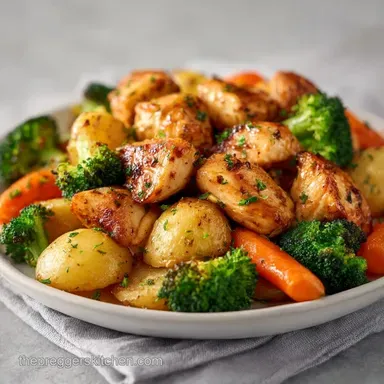
Pregnancy Sheet Pan Meal: Chicken & Root Veggies
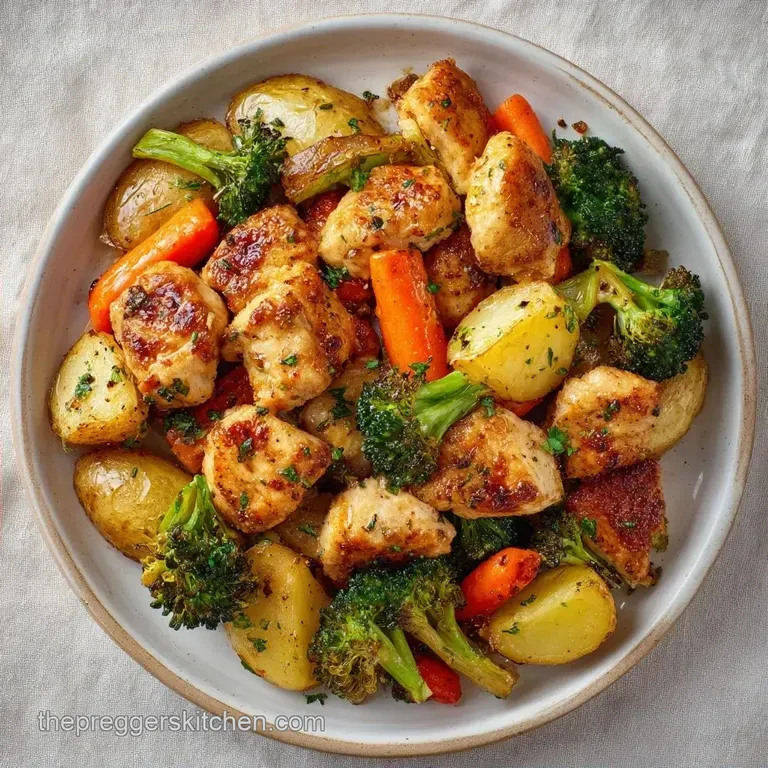
- Time: 15 min active + 25 min roasting
- Flavor/Texture Hook: Zesty lemon chicken with velvety wilted spinach
- Perfect for: Nutrient dense weeknight dinner for two
- Healthy Pregnancy Sheet Pan Meal Guide
- The Science of Nutrient Density
- Component Breakdown and Roles
- Essential Ingredients and Swaps
- Step by Step Roasting Guide
- Preventing Common Cooking Errors
- Modifying for Dietary Needs
- Freshness and Waste Tips
- Perfect Side Dish Pairings
- Truths About Sheet Pan Cooking
- Recipe FAQs
- 📝 Recipe Card
Healthy Pregnancy Sheet Pan Meal Guide
There is nothing more frustrating than pulling a sheet pan out of the oven only to find that your broccoli has turned into charcoal while your potatoes are still hard in the middle. It's a common failure in one pan cooking.
You want the convenience, but you end up with a textural nightmare that feels more like steamed mush than a roasted meal. When you're dealing with pregnancy fatigue, the last thing you need is a meal that requires three different roasting times.
I used to make the mistake of throwing everything on the pan at once and hoping for the best. The result was always the same: dry chicken and soggy carrots. The trick is in the "zonal" placement and the temperature control.
By treating the pan as a map rather than a bowl, you can get that golden brown finish on the root veggies without overcooking the lean protein.
This Pregnancy Sheet Pan Meal is designed to be a reliable win. It balances iron rich spinach and folate packed broccoli with a clean protein source. We are focusing on getting those vitamins in without spending two hours standing over a stove.
It's about working smarter, not harder, so you can actually enjoy your dinner and get some much needed rest.
The Science of Nutrient Density
Rather than just throwing ingredients together, this recipe relies on a few simple mechanisms to preserve vitamins and ensure the food is actually digestible.
The Lemon Shield: Placing lemon slices directly on the chicken creates a physical barrier against the direct heat. This prevents the surface of the meat from drying out, keeping it juicy while it reaches the safe internal temperature of 165°F.
Residual Heat Wilting: Spinach is delicate and loses its folate and vitamins if blasted in a 400°F oven. By adding it after the pan comes out, the residual heat from the chicken and potatoes wilts the leaves in 60 seconds, preserving the nutrients.
Staggered Density: Potatoes and carrots are dense and take longer to soften. By tossing them in oil and salt first, we create a conductive layer that helps them brown through conduction, while the lighter broccoli stays crisp tender.
Fat Soluble Absorption: Many of the vitamins in carrots and spinach are fat soluble. Using a high-quality extra virgin olive oil ensures your body can actually absorb the Beta carotene and Vitamin K during digestion.
| Method | Prep Time | Texture | Best For |
|---|---|---|---|
| Stovetop | 10 mins | Sautéed/Soft | Quick snacks |
| Oven Roast | 15 mins | Caramelized/Crispy | Nutrient dense meals |
| Steaming | 5 mins | Soft/Pale | Very sensitive stomachs |
Component Breakdown and Roles
Understanding why these specific ingredients are here helps you make better choices if you need to swap something out.
| Ingredient | Science Role | Pro Secret |
|---|---|---|
| Chicken Breast | Lean Protein & Iron | Cut into uniform 1 inch cubes for even cooking |
| Baby Potatoes | Complex Carbs/Energy | Halve them to increase surface area for browning |
| Broccoli | Folate & Fiber | Add to the gaps to prevent them from steaming |
| Baby Spinach | Non heme Iron | Toss at the very end to keep the color vibrant |
Essential Ingredients and Swaps
Stick to these measurements for the best results. If you're missing something, use the substitution table below to keep the nutritional profile intact.
- 1 lb boneless, skinless chicken breasts, cut into 1 inch cubes Why this? High protein, low saturated fat
- 3 tbsp extra virgin olive oil Why this? Heart healthy fats for nutrient absorption
- 2 cups baby potatoes, halved Why this? Steady energy release, avoids sugar spikes
- 2 cups carrots, sliced into coins Why this? Beta carotene for fetal eye development
- 1 cup broccoli florets Why this? High folate content
- 1 tsp garlic powder Why this? Flavor without the risk of burnt fresh garlic
- 1 tsp dried oregano Why this? Simple, aromatic digestive support
- 1/2 tsp sea salt Why this? Essential electrolytes for fluid balance
- 1/4 tsp black pepper Why this? Adds depth without irritating the stomach
- 1 lemon, sliced into thin rounds Why this? Vitamin C helps absorb the iron in spinach
- 2 cups fresh baby spinach Why this? Iron rich greens
| Original Ingredient | Substitute | Why It Works |
|---|---|---|
| Chicken Breast | Firm Tofu (pressed) | Similar protein profile. Note: May need 5 mins more roasting |
| Baby Potatoes | Parsnips | Similar roasting time and earthy flavor |
| Broccoli | Cauliflower | Similar structure and roasting behavior |
| Olive Oil | Avocado Oil | High smoke point, neutral flavor |
Since some people find the scent of roasting vegetables overwhelming during certain trimesters, you might find that a homemade electrolyte drink helps keep you hydrated and refreshed while you prep.
Step by step Roasting Guide
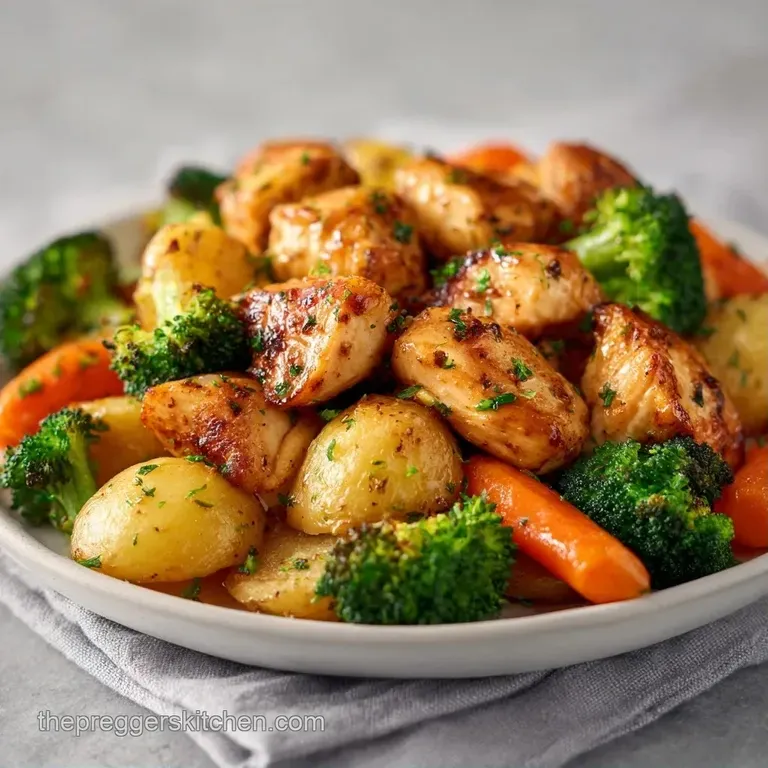
Follow these steps exactly. The timing is calibrated to ensure nothing is raw and nothing is burnt.
- Preheat your oven to 400°F (200°C) and line a large rimmed baking sheet with parchment paper. Note: Parchment prevents sticking and makes cleanup effortless.
- In a large mixing bowl, toss the cubed chicken and halved baby potatoes with 2 tablespoons of olive oil, garlic powder, dried oregano, sea salt, and black pepper until evenly coated.
- Spread the chicken and potatoes across the prepared baking sheet in a single layer. Note: Do not heap them; they need space to roast, not steam.
- Nestle the sliced carrots and broccoli florets (tossed in the remaining 1 tablespoon of olive oil) into the gaps on the pan.
- Place lemon slices directly on top of the chicken pieces to maintain moisture during roasting.
- Roast for 20–25 minutes until the chicken reaches 165°F (74°C) and potatoes are golden brown. According to USDA Food Safety guidelines, reaching 165°F is the standard for safe poultry consumption.
- Immediately upon removing the pan from the oven, scatter fresh baby spinach over the hot ingredients.
- Allow the residual heat to wilt the leaves for about 60 seconds until they look soft and dark green.
Preventing Common Cooking Errors
Most sheet pan failures happen because of "crowding." If the ingredients are touching too much, the moisture they release has nowhere to go. Instead of roasting, they poach in their own juices, leading to a soggy texture.
Why Your Vegetables Are Soggy
This usually happens when the pan is too small or the vegetables are sliced too thick. When steam is trapped between pieces of broccoli and carrots, they boil rather than brown. Use a large rimmed sheet and ensure there is a tiny bit of breathing room between the items.
To Prevent Dry Chicken
Chicken breast has very little fat, so it dries out fast. If you skip the lemon slices or overcook by even 5 minutes, the meat becomes rubbery. Always use a meat thermometer to hit exactly 165°F.
Avoid Underdone Potatoes
If your potatoes are still hard but the chicken is done, it's likely because the potato chunks were too large. Stick to "baby" potatoes or cut larger ones into smaller, uniform halves.
| Problem | Root Cause | Solution |
|---|---|---|
| Burnt Broccoli | Too close to heat | Place broccoli in the center of the pan |
| Mushy Carrots | Overcooked | Slice them into thicker coins (1/2 inch) |
| Bland Flavor | Lack of salt | Toss vegetables in the bowl, not on the pan |
Success Checklist:
- ✓ Ingredients are spread in a single layer.
- ✓ Chicken is protected by lemon slices.
- ✓ Potatoes are halved for maximum surface area.
- ✓ Spinach was added AFTER the oven was turned off.
- ✓ Internal chicken temp hit 165°F.
Modifying for Dietary Needs
Depending on where you are in your pregnancy, your tastes and needs might change. You can easily tweak this Pregnancy Sheet Pan Meal without losing the health benefits.
For Maximum Nutrient Absorption
If you're struggling with iron levels, add a squeeze of fresh lemon juice over the finished spinach. The Vitamin C in the lemon helps your body absorb the non heme iron found in the spinach and broccoli.
To Minimize Kitchen Exhaustion
If standing for 15 minutes is too much, prep the chicken and veg in the bowl the night before and keep them in a sealed container in the fridge. When you're ready, just dump them on the pan and roast.
For a Low Carb Version
Swap the baby potatoes for diced turnips or cauliflower florets. This keeps the roasted texture but lowers the glycemic load, which can be helpful for those managing gestational blood sugar.
| If you want... | Do this... |
|---|---|
| More Omega-3s | Sprinkle toasted walnuts on top after roasting |
| More Creaminess | Drizzle with a bit of tahini or Greek yogurt |
| Less Garlic | Use a pinch of onion powder instead |
Freshness and Waste Tips
Storage is key for meal prep. This recipe is great for leftovers, provided you reheat it correctly to avoid "rubbery chicken syndrome."
Fridge Storage: Store in an airtight glass container for up to 4 days. The spinach will continue to soften over time, but the chicken and root veggies hold up well.
Reheating for Quality: Do not microwave on high for long periods. Instead, use a toaster oven at 350°F for 5-7 minutes, or microwave at 50% power in 30 second bursts. This prevents the chicken from toughening.
Zero Waste Tips: Don't throw away the lemon rinds after you've used the slices. Zest the lemon before slicing it, and freeze the zest in a small jar to add to morning smoothies or other roasted dishes. Any leftover carrot peels can be tossed into a freezer bag for making vegetable broth later.
Perfect Side Dish Pairings
While this meal is complete on its own, sometimes you need a bit more bulk to feel fully satisfied.
For a comforting addition, I highly recommend serving this with some Homemade French Bread. The crusty bread is great for soaking up the lemon garlic juices left on the pan.
If you want something lighter, a simple side of sliced cucumbers with apple cider vinegar provides a refreshing, acidic contrast to the roasted flavors of the chicken and potatoes.
Truths About Sheet Pan Cooking
There are a few misconceptions about one pan meals that can lead to poor results. Let's clear them up.
Myth: You must sear meat first. Some people think you need to brown the chicken in a pan before roasting. In this specific Pregnancy Sheet Pan Meal, it's unnecessary. The 400°F oven is hot enough to brown the edges if the pan isn't overcrowded.
Myth: All vegetables roast at the same speed. This is the biggest lie in cooking. Broccoli cooks much faster than potatoes. That's why we nestle the broccoli into the gaps rather than tossing it with the potatoes in the initial bowl.
Myth: Frozen vegetables work the same. If you use frozen broccoli, do not thaw it first. Put it in frozen; otherwise, it releases too much water and steams the rest of your dinner.
Recipe FAQs
What makes this sheet pan meal a good choice for pregnancy?
It balances lean protein and vegetables with minimal cleanup. The combination of chicken and greens provides essential nutrients without requiring hours of kitchen work.
Is this sheet pan meal safe for pregnancy?
Yes, provided the chicken is fully cooked. Use a meat thermometer to ensure the chicken reaches an internal temperature of 165°F (74°C) to eliminate foodborne illness risks.
How to customize this meal for pregnancy cravings?
Modify the seasonings or add extra lemon. Increase the garlic powder or add more lemon slices to satisfy salty or sour cravings without adding processed ingredients.
How to prevent the vegetables from steaming instead of roasting?
Spread the ingredients in a single layer on the baking sheet. Overcrowding creates steam, which prevents the baby potatoes and carrots from becoming golden brown.
Why place lemon slices on top of the chicken?
They protect the meat from drying out. The slices act as a moisture barrier during the 20 25 minutes in the 400°F (200°C) oven.
Is it true that spinach should be roasted for the full 25 minutes?
No, this is a common misconception. Roasting spinach for the full duration would destroy its nutrients; instead, wilt it for 60 seconds using residual heat after removing the pan from the oven.
What other nutrient dense meals follow a similar preparation style?
Explore recipes that emphasize roasted produce and lean proteins. If you enjoyed the roasting process here, see how a similar approach works in these stuffed bell peppers.
Pregnancy Sheet Pan Meal